After hectic, haphazard Hanoi we wanted to take a trip North to the mountains and a town called Sapa.
We had a luxurious “limousine” mini-bus for the long journey to Sapa.
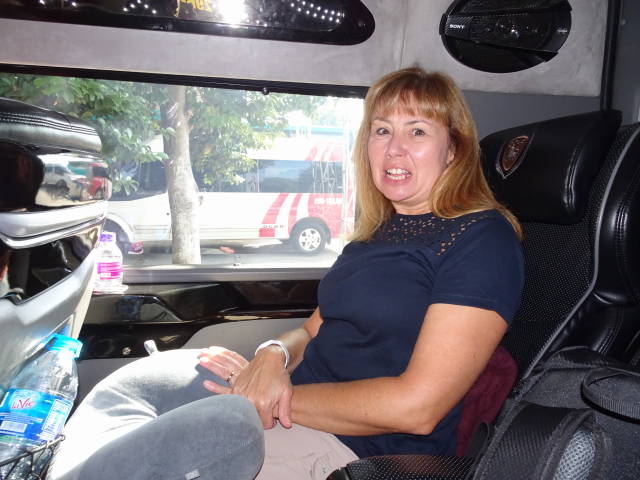
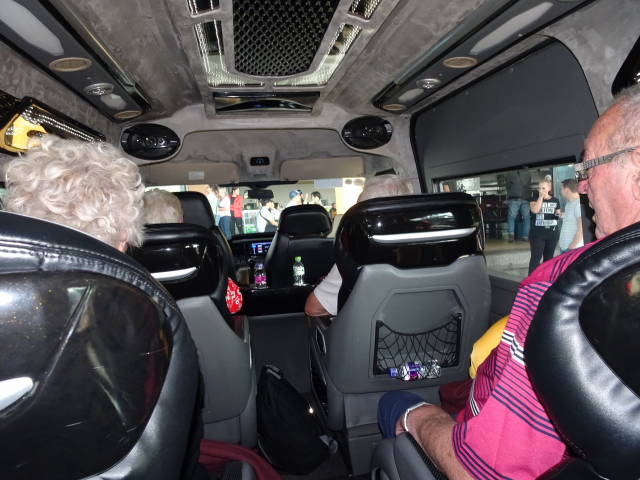
Kitted out for Karaoke (Car-Ear-Ache?) with lights and speakers.
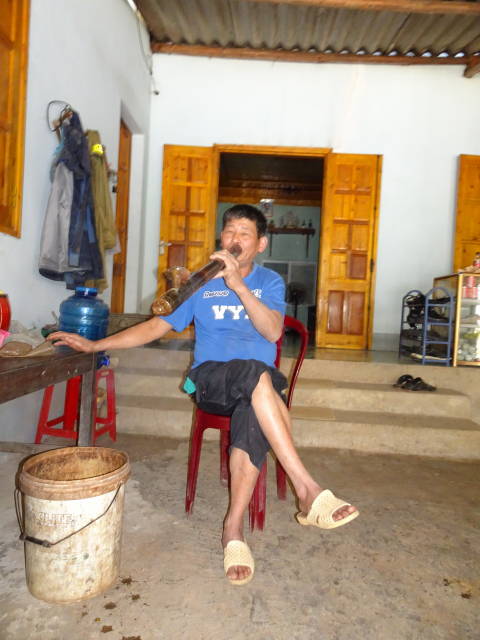
Crazy, friendly local guy at a stop on the way. Maybe something to do with what he was smoking.
Unfortunately the wheel bearing went on the steep, winding roads up the mountain and they had to send a replacement bus for the last 8km.
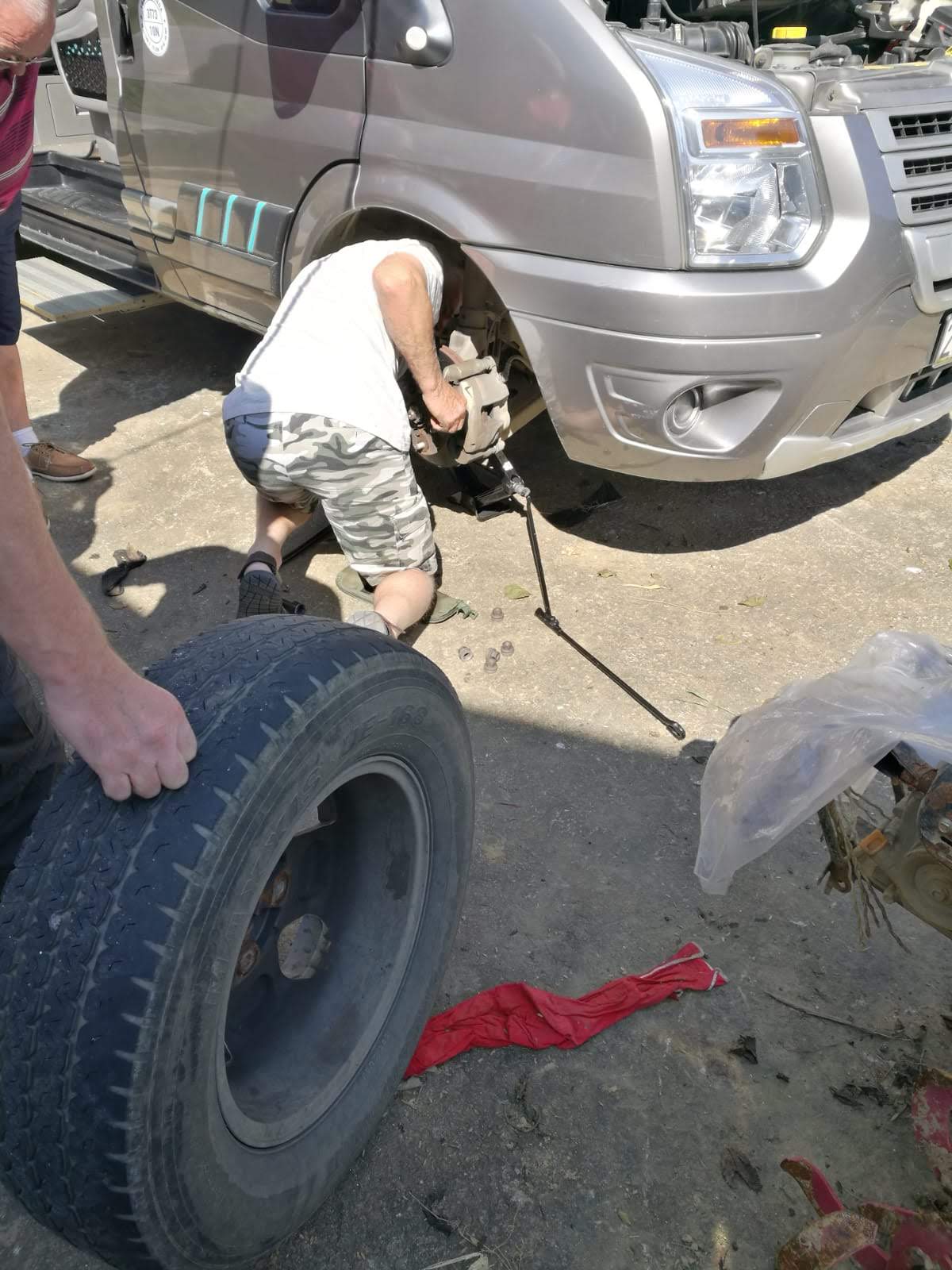
Yep, the wheel bearing has gone.
We arrived in Sapa late afternoon.
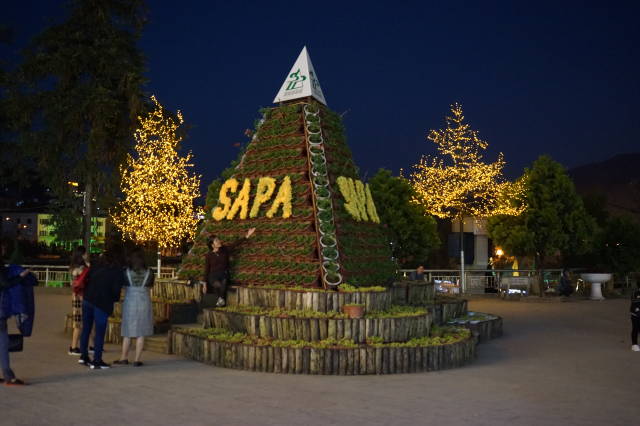
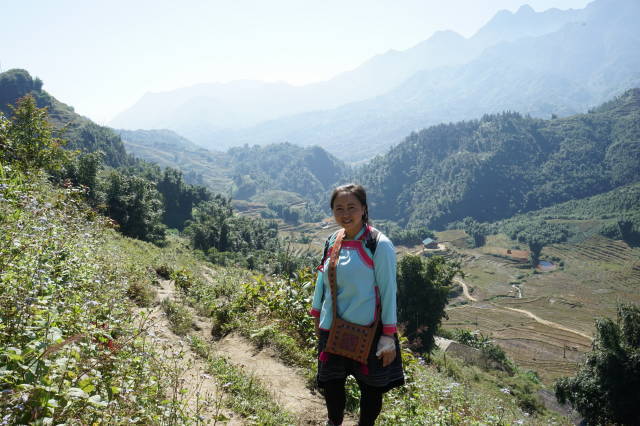
Sapa is famous for its mountain rice terraces and tribal villages, and trekking is very popular here. So we hired a local guide called Giang who took us on a fifteen kilometre hike through the countryside away from the common tourist trails.
Giang our lovely guide. She’s actually wearing the dress of another tribe since it’s lighter weight for trekking in the heat.
We hiked to Giang’s home village called Ta Van, and her Auntie made lunch for us.
There are villages for many small tribes in a fairly close area. Each tribe has their own language, and so surprisingly they can’t communicate with the nearby tribes. The younger people learn Vietnamese in school so at least they now have a common language to speak to neighbouring tribes.
Each tribe also has its own distinctive traditional dress which is still worn. For example, the “Black Hmong” tribe wear black clothing. We explained to Giang how it’s the same with Scottish tribes (clans) and kilts.
Sapa is close to the Chinese border. The local tribes originated in China, and so their features are different from those in Hanoi for example.
There were spectacular views of the mountains and rice terraces.
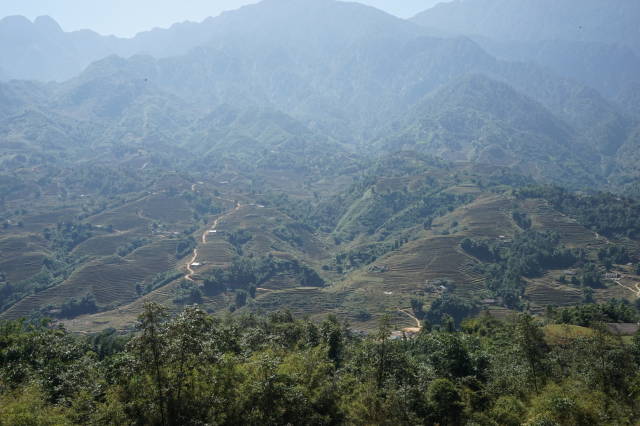
Quite a view
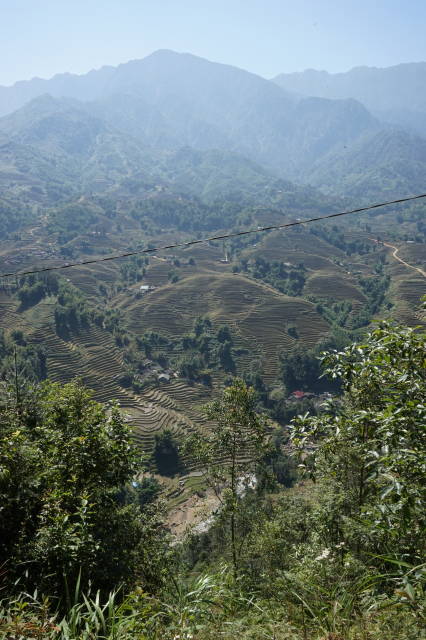
View of the paddy terraces (steps). Needs photoshopping to remove the wire.
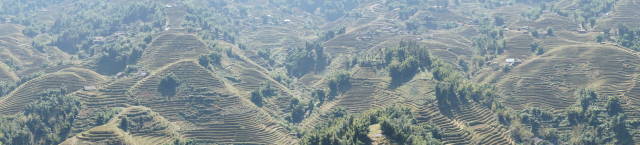
Paddy panorama
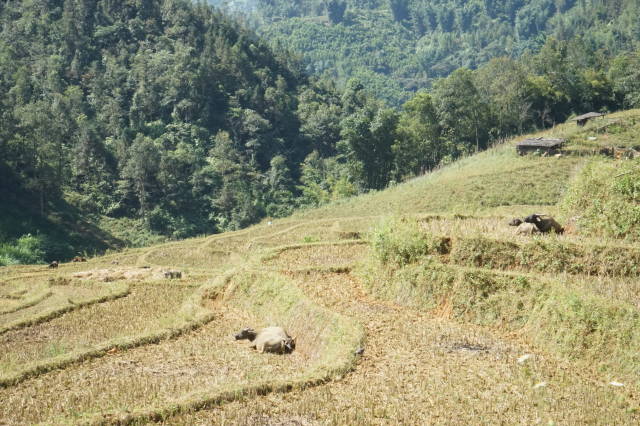
Buffaloes sleeping in the paddy fields after the crop was harvested. Their next job is ploughing next year – or feeding the family!
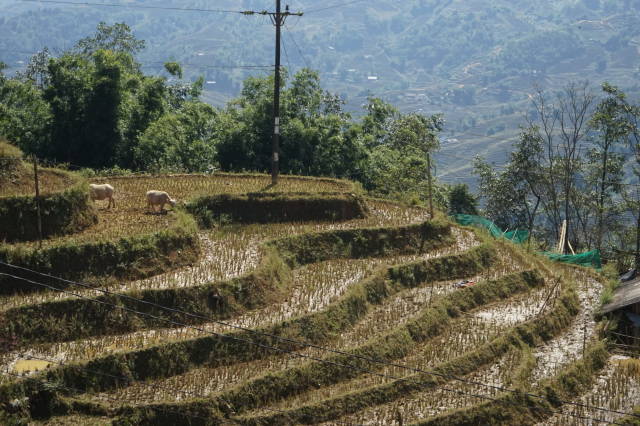
Rare white water buffaloes
Water buffaloes are very valuable. They’re used as wedding dowrys paid to the bride’s parents. There’s a tradition where the groom-to-be “kidnaps” the potential bride and takes her to their home. They live together for three days and they then decide whether to get married or not.
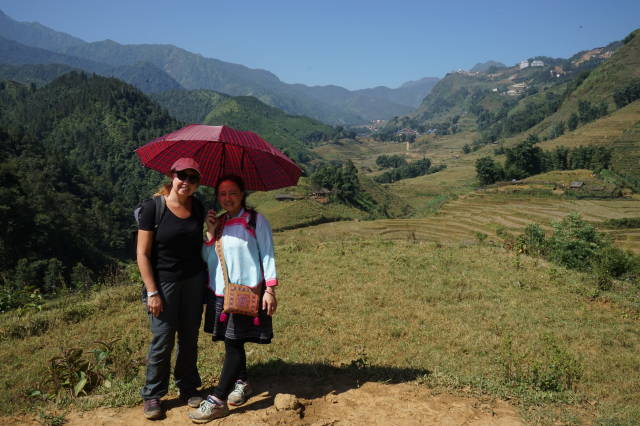
Michelle and Giang with her Scottish tartan umbrella (parasol)
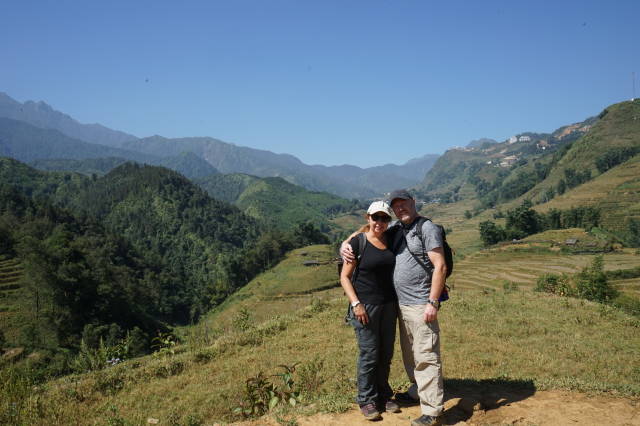
A couple of hikers
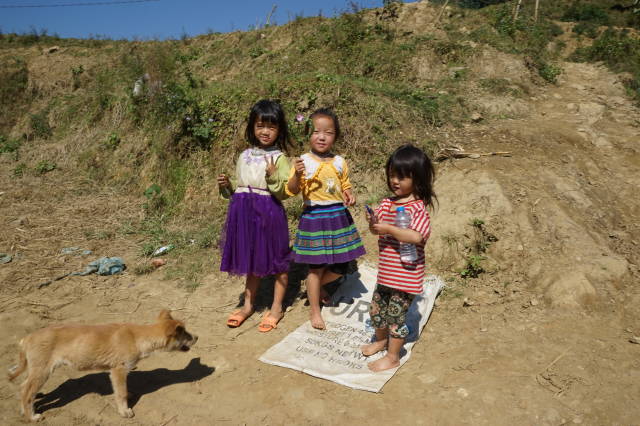
Local waifs and strays. Happy with the pens and sweets Ronnie gave them (not the dog).
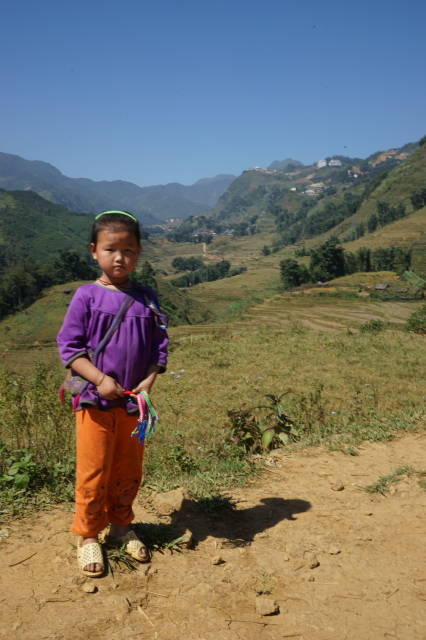
Local “Mona Lisa” girl who (unusually) didn’t smile – even when Ronnie gave her a pen and sweets. She had some traditional medicine spread on her forehead to treat a headache. So she probably had a good reason not to smile.
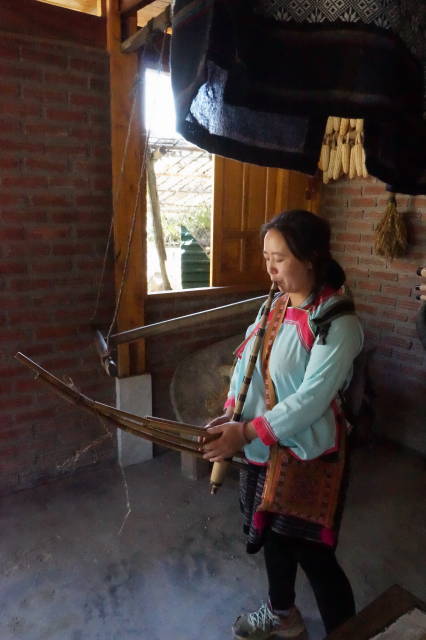
Giang playing the local pipes. Scottish bagpipes without the bag?
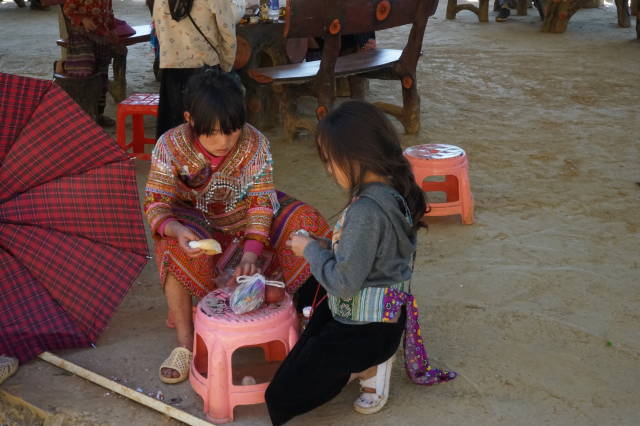
Local girl in traditional costume (and Giang’s Scottish umbrella)
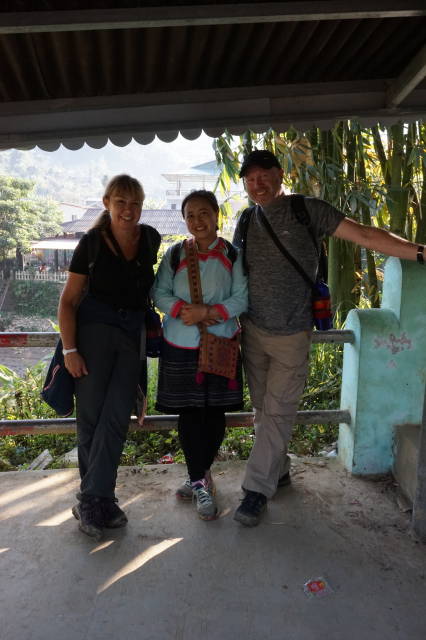
The end of our hike with Giang.
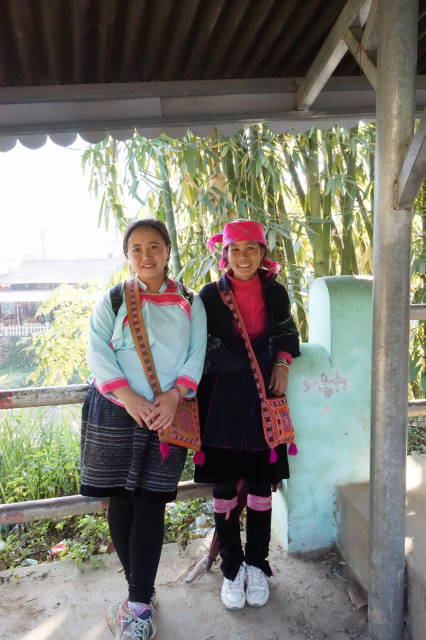
Giang and her friend, another tour guide from a different tribe.
We used a number of modes of transport on this trip: “limousine” bus, funicular railway (x 2), gondola, shank’s pony, mini-bus, and overnight train back to Hanoi.
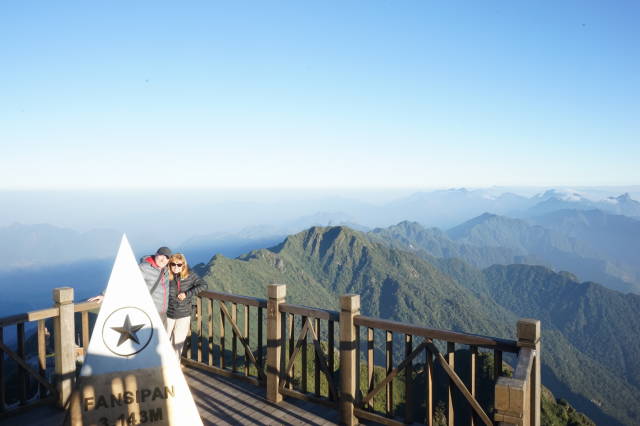
We took the funicular railways and gondola to the top of Fansipan mountain. Fansipan is the highest mountain in the Indochina peninsula. The Gondola is over 6km long (and pretty high too!).
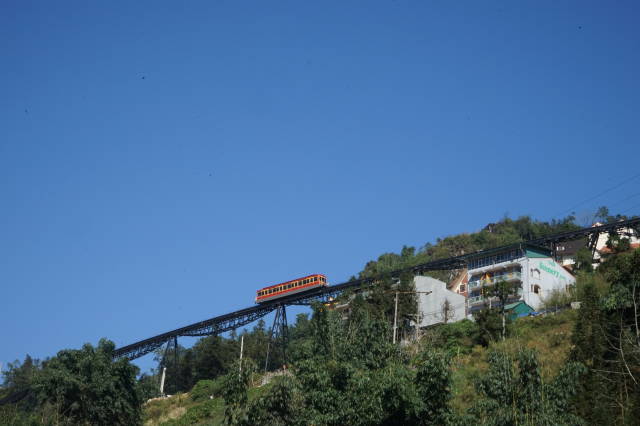
Funicular railway #1
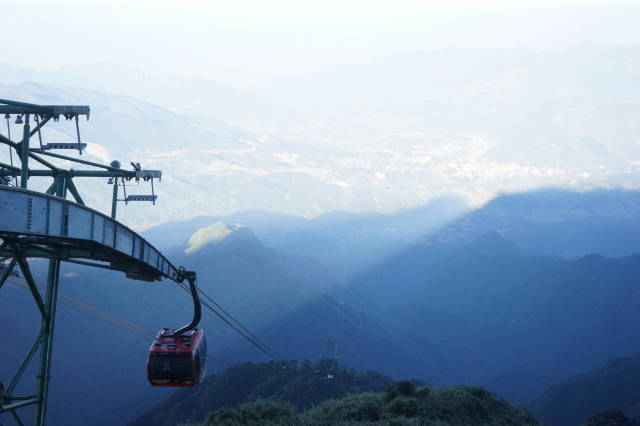
Gondola
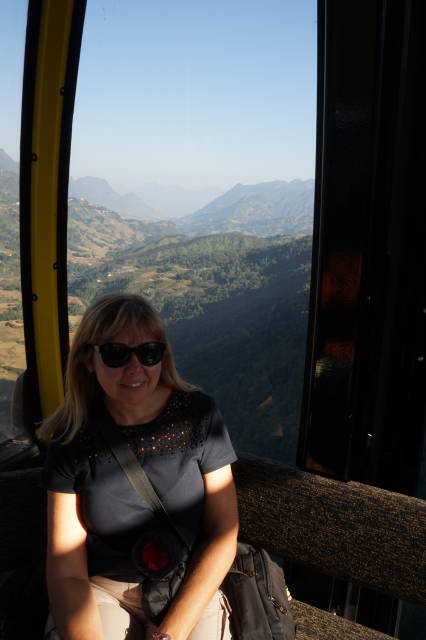
A passenger
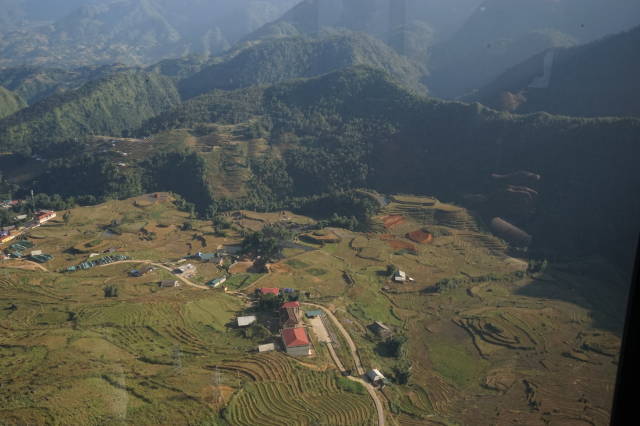
View from the Gondola
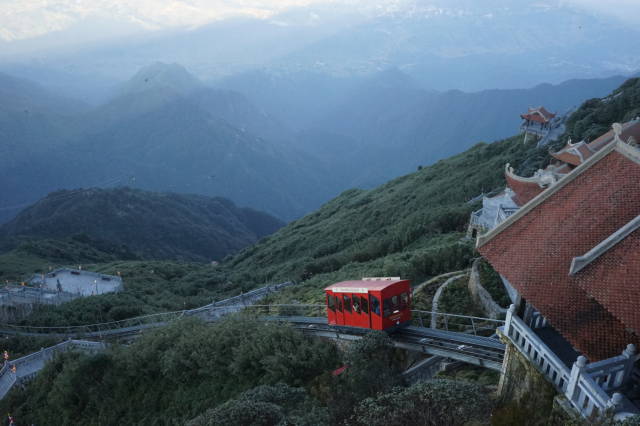
Funicular #2. Only a few steps to the peak now.
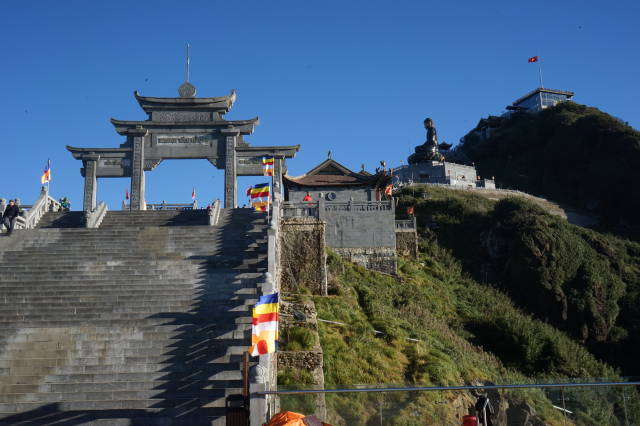
Lots of construction by the Vietnamese “Sunworld” conglomerate.
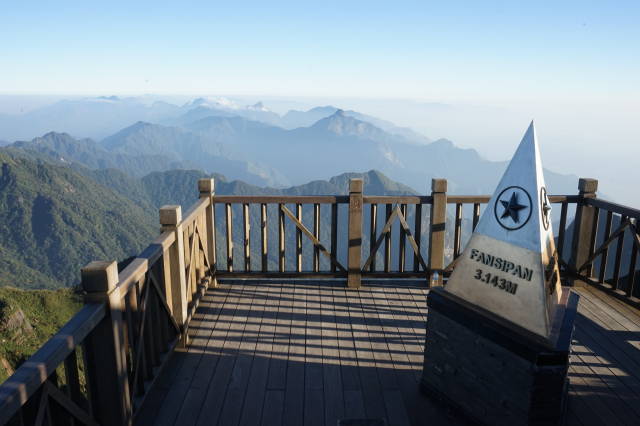
The peak of Indochina. Amazing views. The Chinese border is only about 40km away.
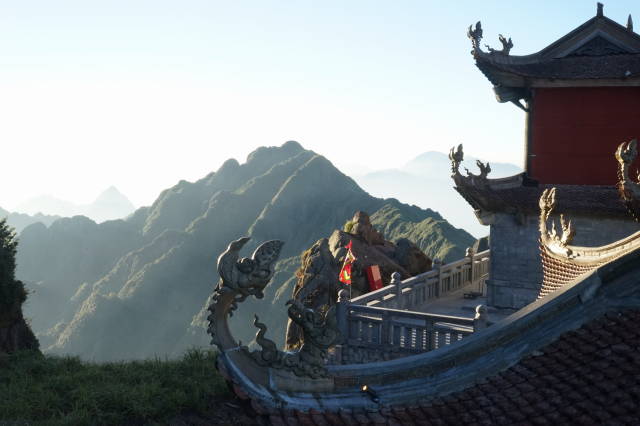
Dragons up here too.
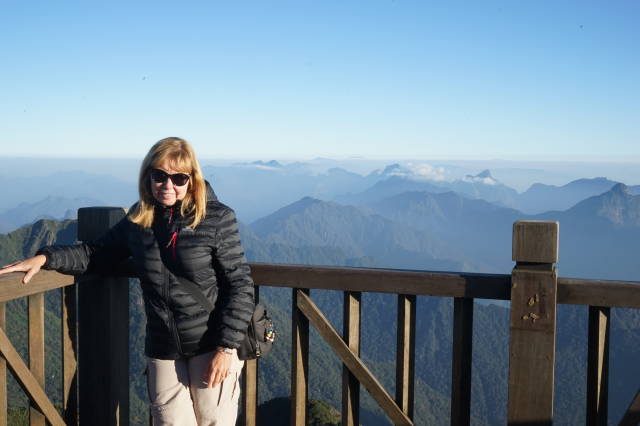
A Welsh one
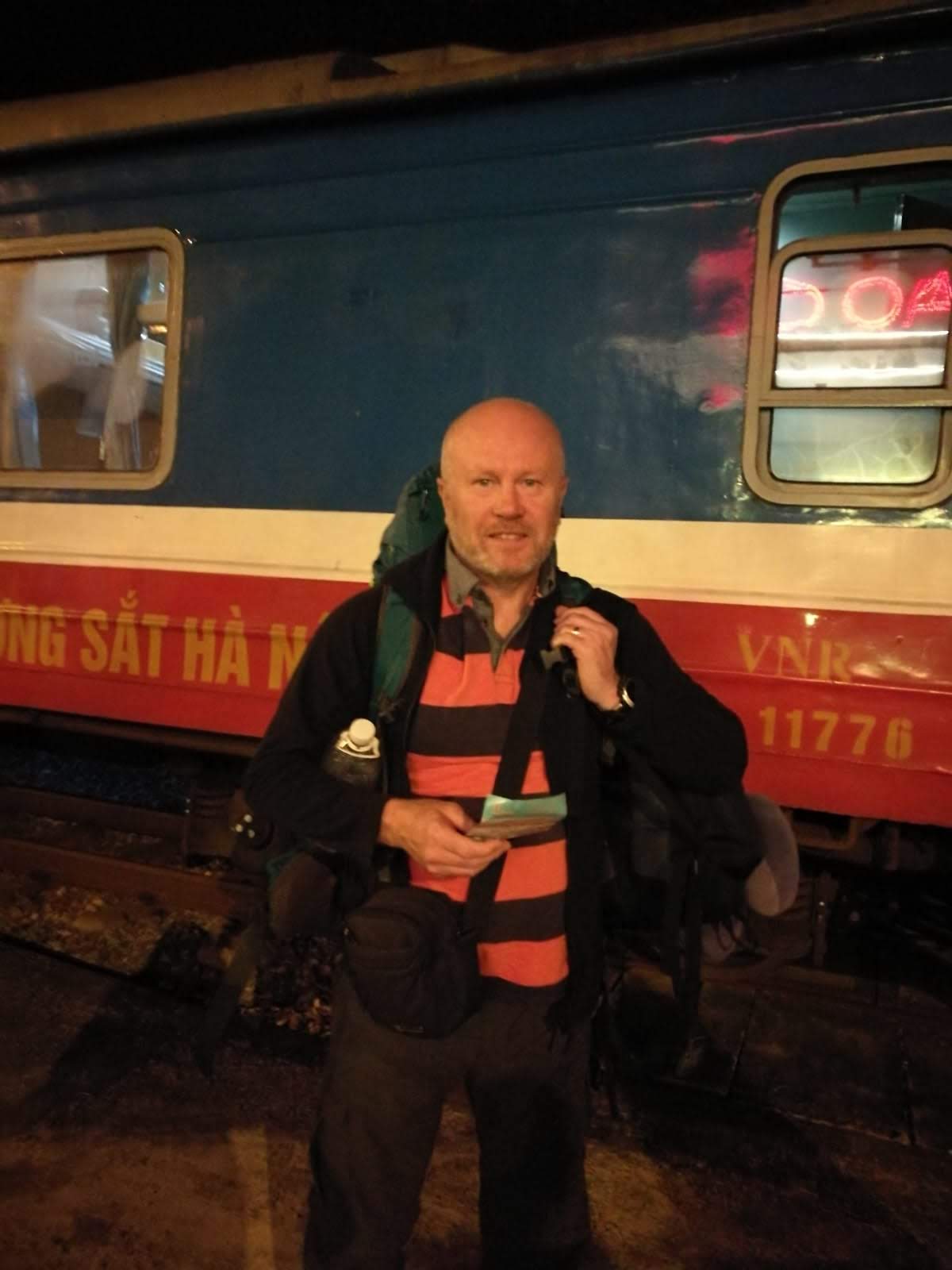
The overnight sleeper train back to Hanoi.