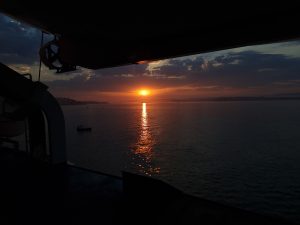
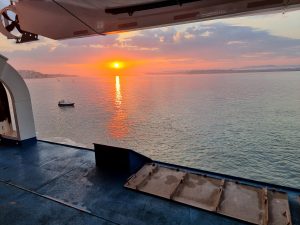
After two nights on board, the sunrise welcomed our ferry into the port at Santander.
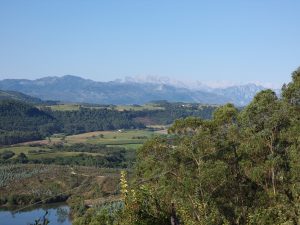
The North coast of Spain is quite green. I wonder why? It appears that the rain in Spain doesn’t actually fall mainly on the plain.
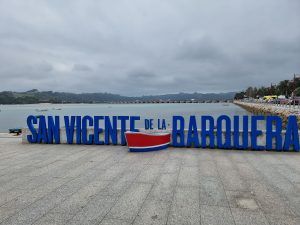
For the first three nights, we had a campsite booked at Playa la Franca near San Vicente de la Barquera. S.V. de la B. is a lovely fishing village about 60km west of Santander.
Ronnie and Don finished their coast-to-coast cycle trip across Spain at San Vicente de la Barquera the year before.
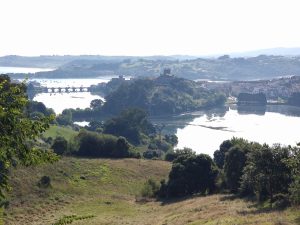
Looking down onto one of S.V. de la B.’s two bridges.
We were staying at a campsite just a bit further west.
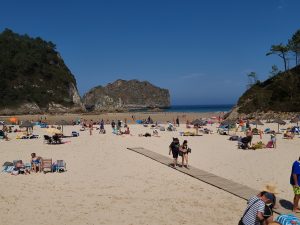
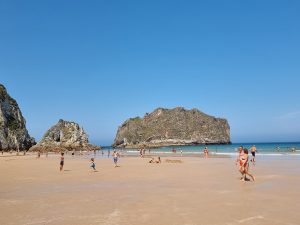
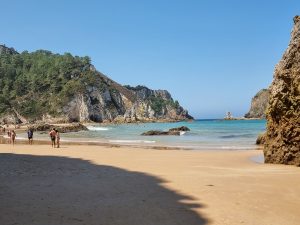
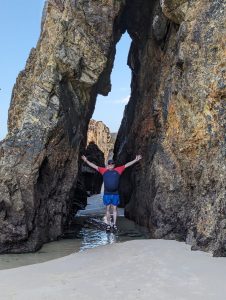
The beautiful beach by the campsite at Playa de la Franca.
There were some wildfires uncomfortably close to the campsite. A helicopter was scooping water from the sea and dumping it on the fires.
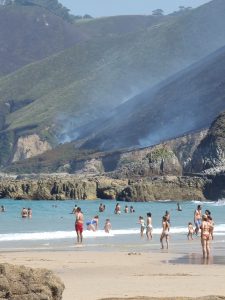
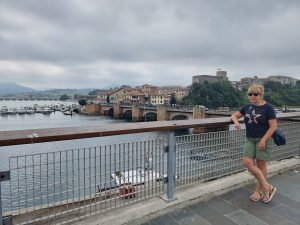
Where has the sun gone?
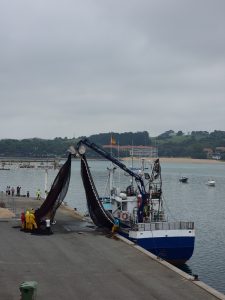
Cleaning the nets on the fishing boat
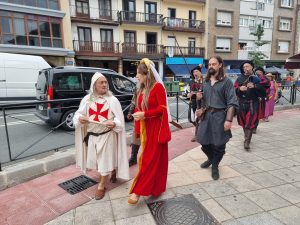
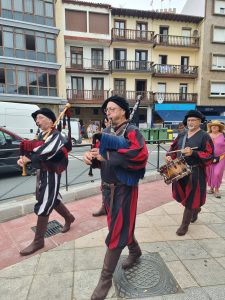
There was a medieval festival going on in the village.
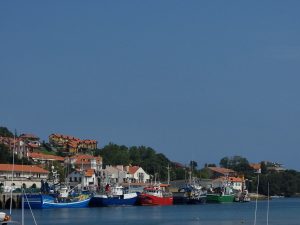
Colour-coordinated fishing boats
The next day we visited Comillas which is famous for “El Capricho de Gaudi”. The site was mobbed, so unfortunately we weren’t able to do a proper visit.
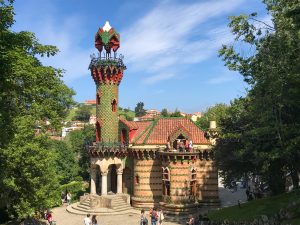
El Capricho de Gaudi (photo from Wikipedia)
We didn’t realise that Gaudi had done work outside of Barcelona, but he worked all over Spain (see later too).
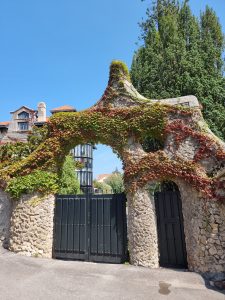
Gaudi gate – Puerta de los Pájaros
Gaudi’s gate had one entrance for carts/cars, one for people, and the smaller one above for birds.
The weather then changed, so we decide to do some town/city tours. The first was Llanes which has a very sheltered harbour.
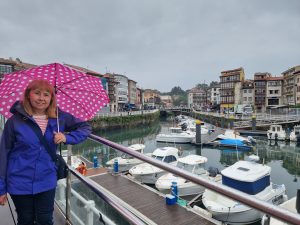
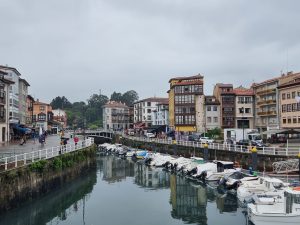
We tried to visit the town of Ribadesella, but everyone else was looking for something to do in the rain, so the town was heaving. We failed to find parking and decided to abort from the crowds. Another time…
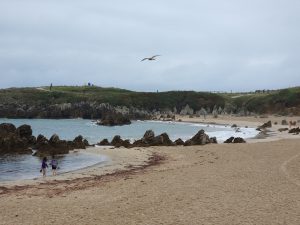
A beach nearby
To escape the rain predicted in the north for the next few days, we headed over the mountains to Astorga. There was a very long climb which made the car work towing the caravan. Once we passed over, the other side of the mountains wasn’t nearly so green, and the sun returned. It was however quite cold as we were still at an altitude over around 1,000m on the plain.
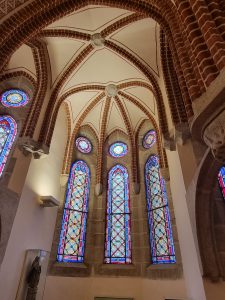
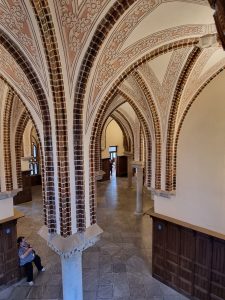
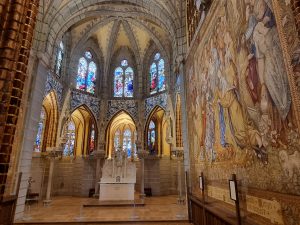
In Astorga, we visited another one of Gaudi’s surprising masterpieces – the Palacio de Gaudi. It’s built right next to the church.
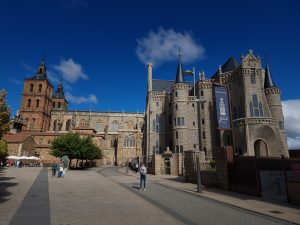
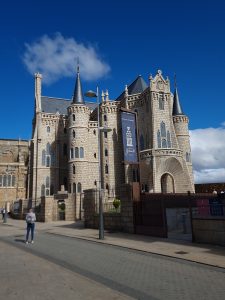
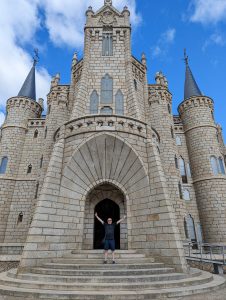
Making an entrance
We took a self-guided tour.
There are three angel statues in the grounds which Gaudi intended to stand on top of towers on the building. Given what was achieved during the construction, I don’t know why they haven’t managed to sort that out in the twenty-first century.
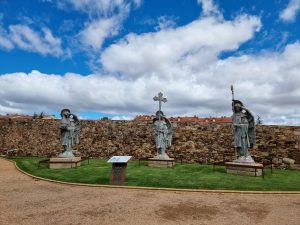
Angel statues
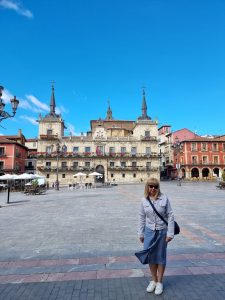
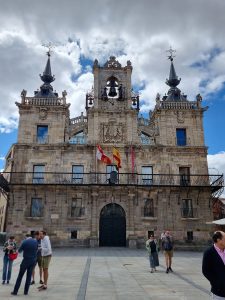
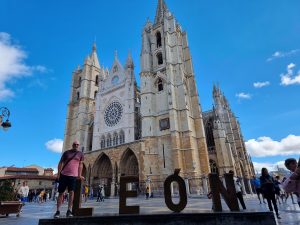
The next day we went to Léon (Spanish for lion). We arrived at Plaza Major.
We headed for the cathedral first.
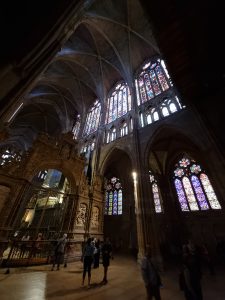
We’re not one for religious excesses, but the architecture is very impressive. The innovation of the vaulted ceilings enabled much slimmer walls with fewer supporting buttresses and more windows. The cathedral, which was built in the thirteenth century, has around 1,800 square metres of stained glass!
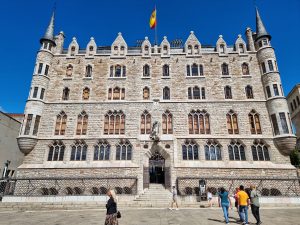
Another of Gaudi’s buildings – Casa Botines
After finding dry, sunny weather, the next task is to get some more warmth, so it’s time to head further south to Portugal…