After arriving in Aswan, we took a boat to the Philae Temple.
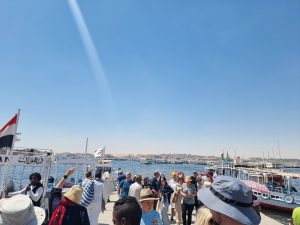
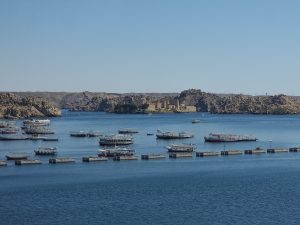
The busy dock for Philae Temple.
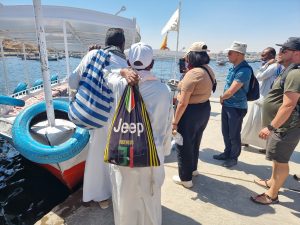
Getting on board
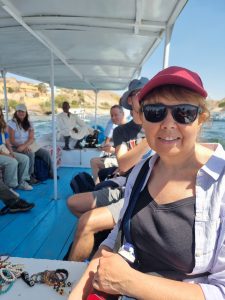
On our way
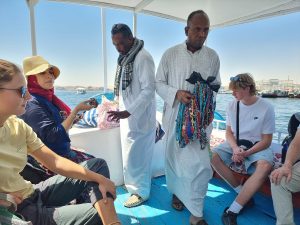
Some trinket sellers were allowed on board. There was a big fight on the dock to see who would get on.
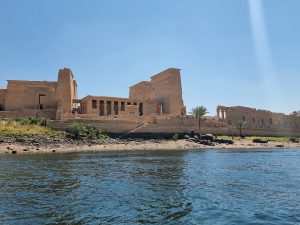
Arriving at the Philae Temple
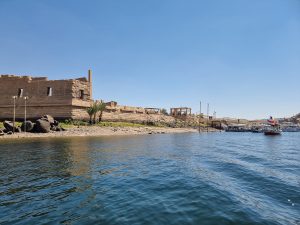
The dock for the Philae Temple
The Philae Temple is located on an island. The whole temple was moved block-by-block from another island which was flooded upon construction of the Aswan High Dam.
Philae is said to be one of the burial places of the Egyptian god Osiris. His body was said to have been chopped into pieces by his evil brother Set. His wife Isis found all of the pieces and wrapped his body up – returning him to life.
There are lots of very intricate stone hieroglyphic carvings. Many were however mutilated by early Christians.
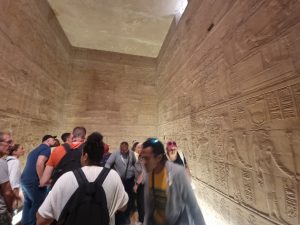
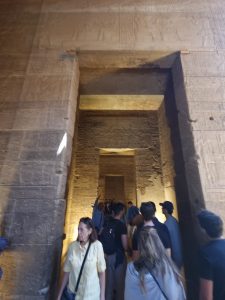
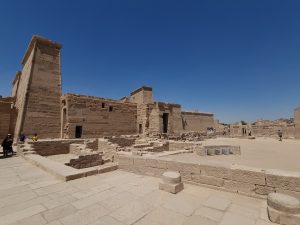
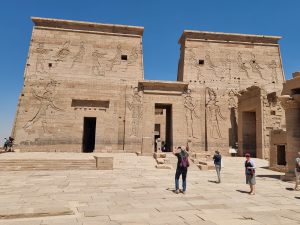
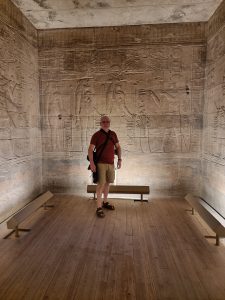
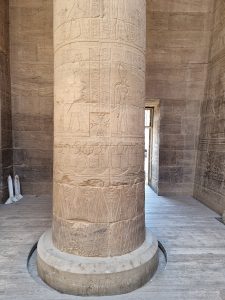
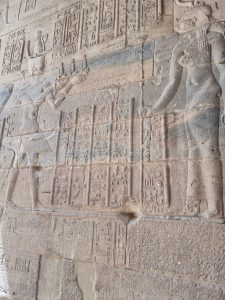
This building was said to be an ancient Egyptian “night club”. There are carvings of musicians and dancers.
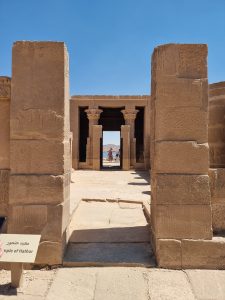
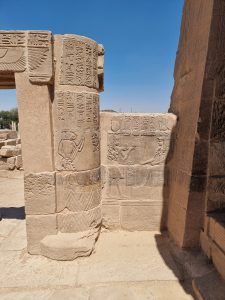
Musical carvings
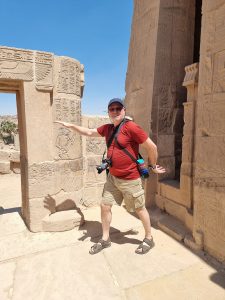
Ronnie dancing like an Egyptian
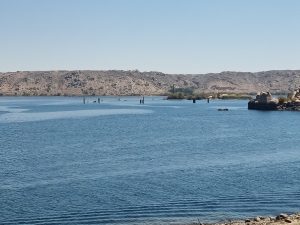
The sunken original location of the temple
After returning from Philae, we took a Fellucca boat to a Nubian village. The Nubians were the people who inhabited Upper Egypt.
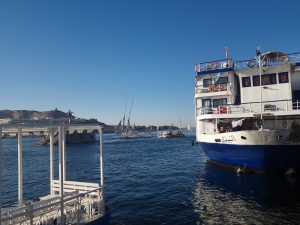
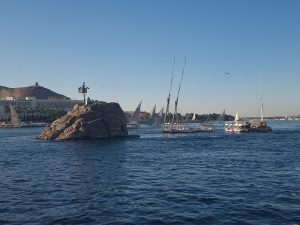
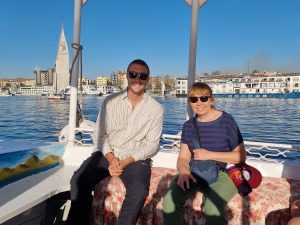
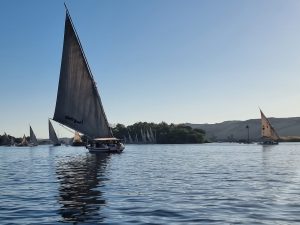
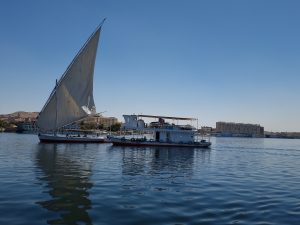
Fellucca sailing boats
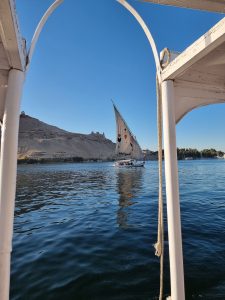
Arty shot?
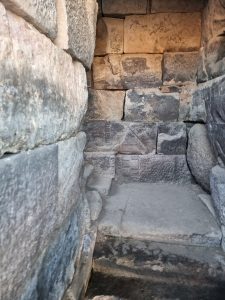
Below is a device for measuring the depth of the Nile. This was important for knowing when it was the time of the annual Nile floods, and therefore for planting crops.
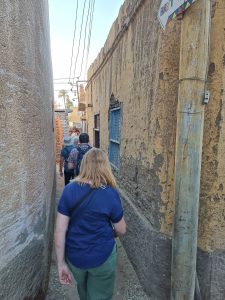
Walking through the village streets.
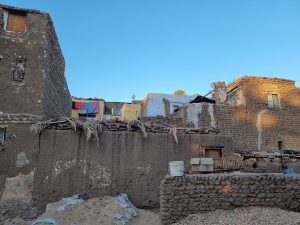
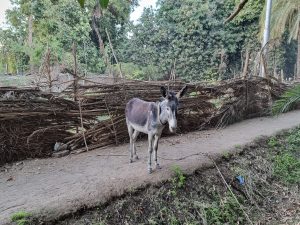
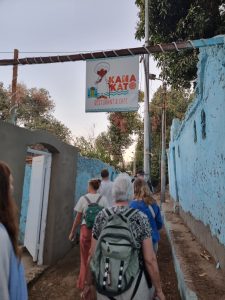
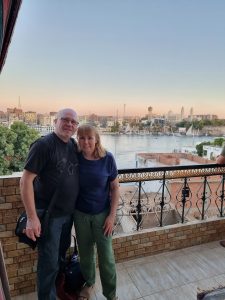
We stopped in a local house for a traditional Nubian dinner with views over the Nile.
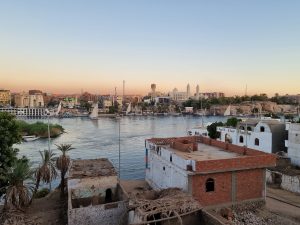
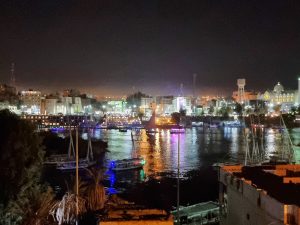
Night lights
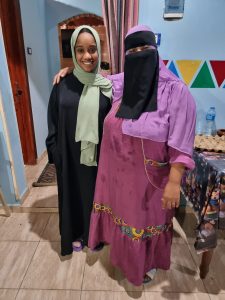
The chefs
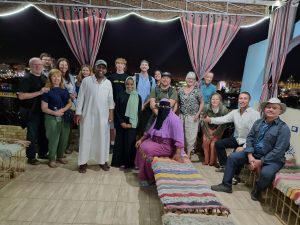
Group photo
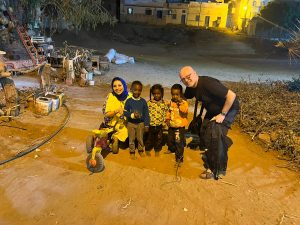
Ronnie did his usual trick of giving sweets to the local kids, and Manar arranged a photo with her too.
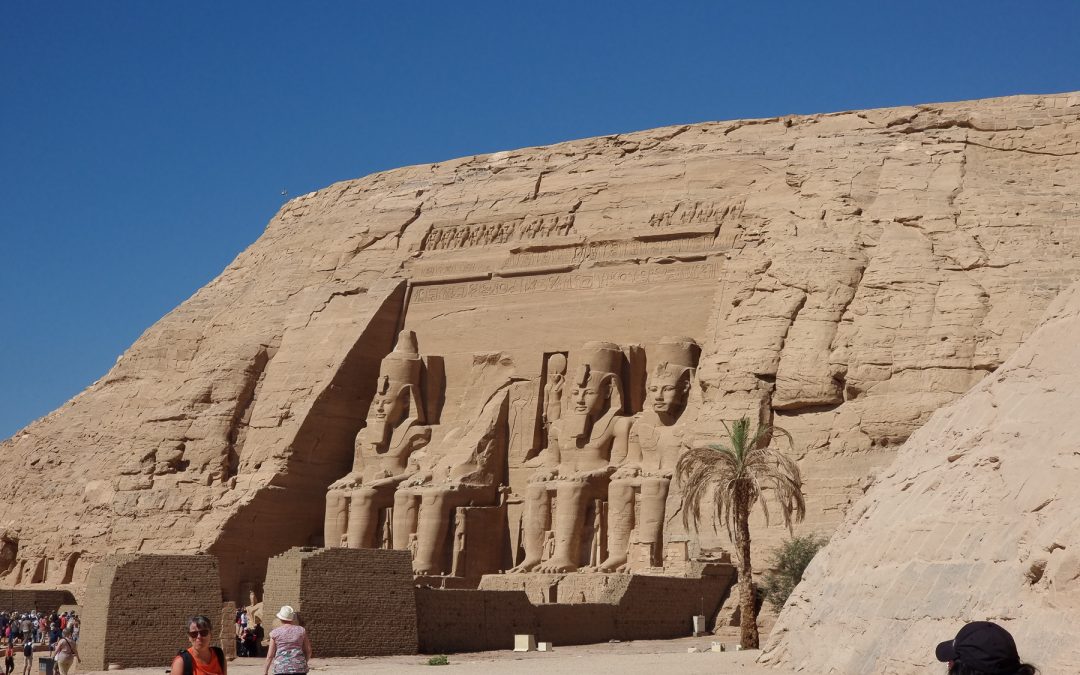
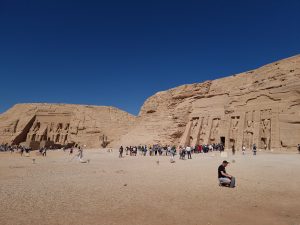
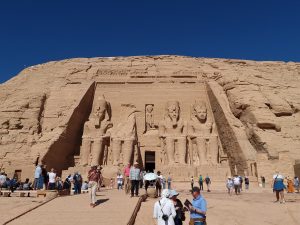
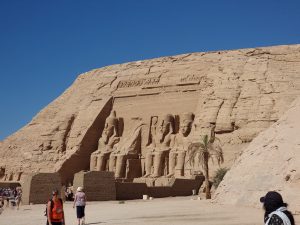
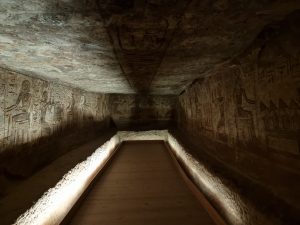
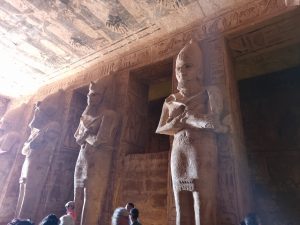
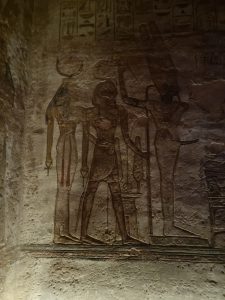
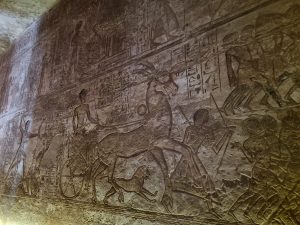
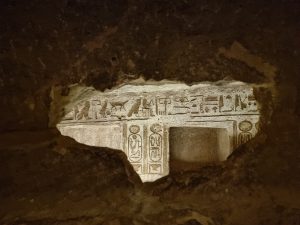
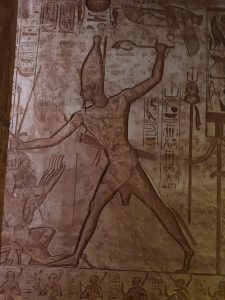
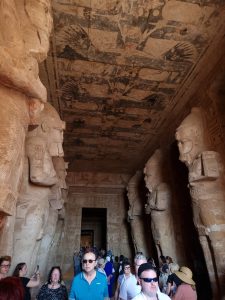
Next stop was Abu Simbel. Like the Philae Temple, Abu Simbel was also relocated to avoid being submerged in Lake Nasser because of the Aswan dam.
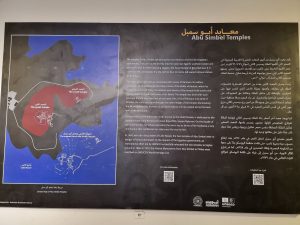
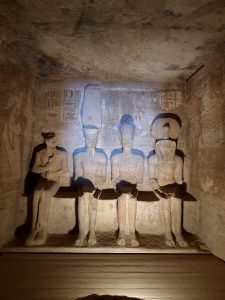
Abu Simbel is a memorial to Rameses II and his wife Nefertari.
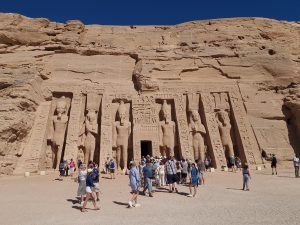
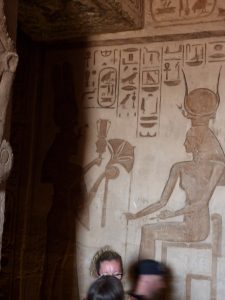
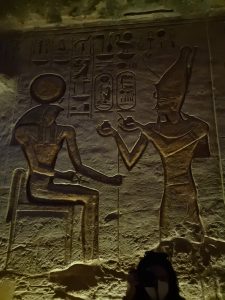
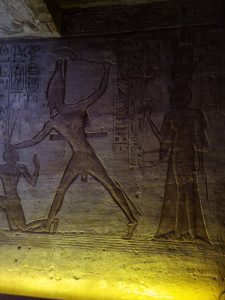
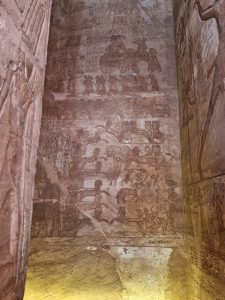
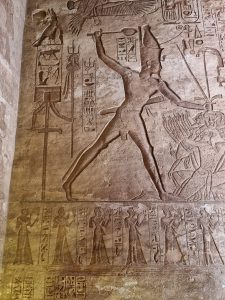
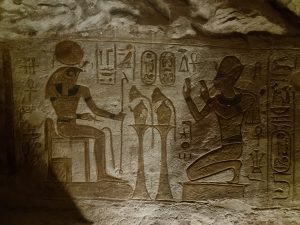
Due to solar alignments, the chamber is illuminated on October 22nd and February 22, the time of the heliacal rising of the star Sirius from the Orion constellation.
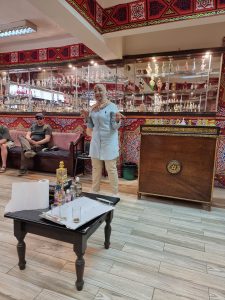
We stopped at a perfume oil factory to learn how the oils were made and how the glass was blown for the bottles.
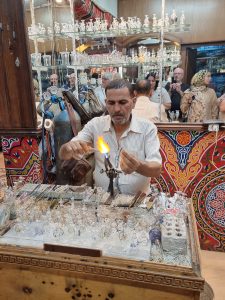
Blowing glass
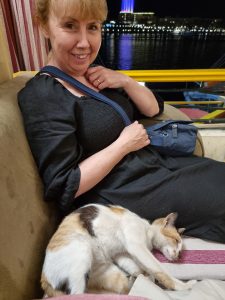
Adopted by a street cat
Then it was time to head back North, down the Nile. This time we were sleeping out on mats on board the traditional Fellucca sailing boat. There were actually two Felluccas, and a support boat (with an engine) which could help tow us if necessary, and also where the toilets and kitchen were.
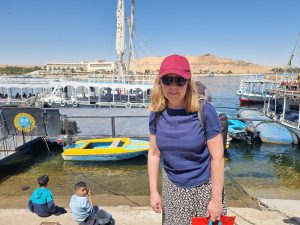
Boarding the Fellucca
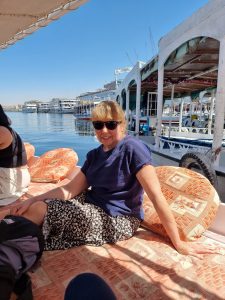
Relaxing on the mattresses
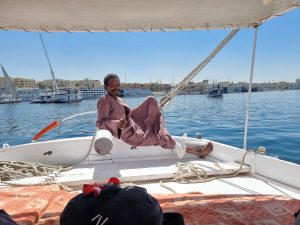
The captain
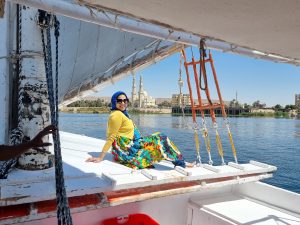
Our guide, Manar, posing on the deck.
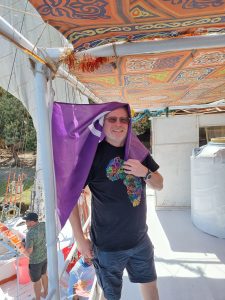
Ronnie flagging that he is now an Arab
The wind got up and the support boat had to come and tow both Felluccas. They can’t sail when the wind is either too low or too high (they topple).
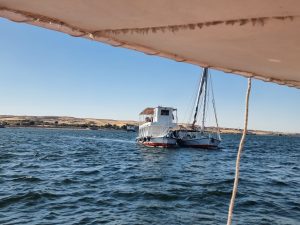
We moored by a “beach” for the night.
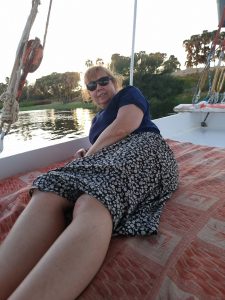
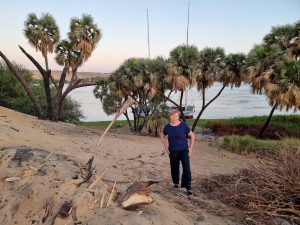
Taking a stroll
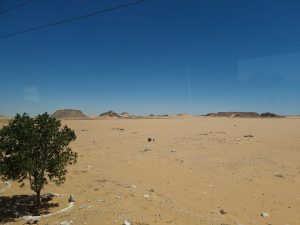
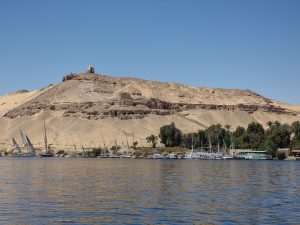
Desert by the river. We saw a Desert Fox.
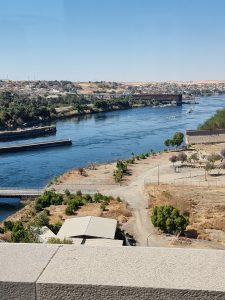
The boat was remarkably comfortable, and the only disturbance was snoring.