We headed into Patagonia which covers part of both Argentina and Chile. Not much grows or lives in the vast wilderness and it’s one of the most sparsely populated regions on the planet.
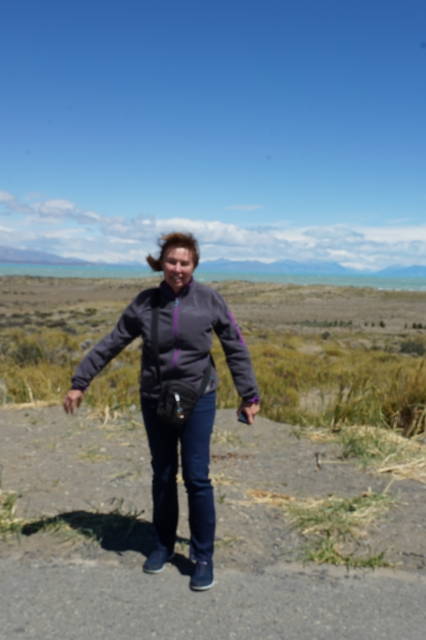
Windy wilderness
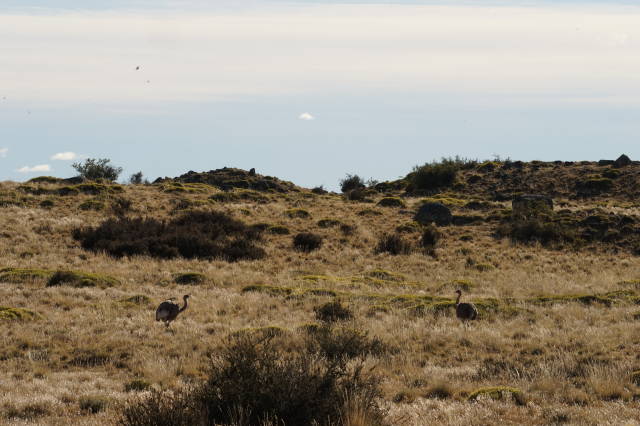
Rhea – a distant relative of the ostrich
We also saw lots of Condors – huge birds – and Guanacos which are similar to Llamas and Alpacas, but I don’t have any good photos (yet).
There are lots of sheep which produce the Patagonian lamb and famous Merino wool.
We flew to El Calafate. This is named after the Calafate bush from the indigenous language. The Calafate bush has bitter berries but at least they’re edible.
We then headed to El Chalten for Los Glaciares (Glaciers) National Park.
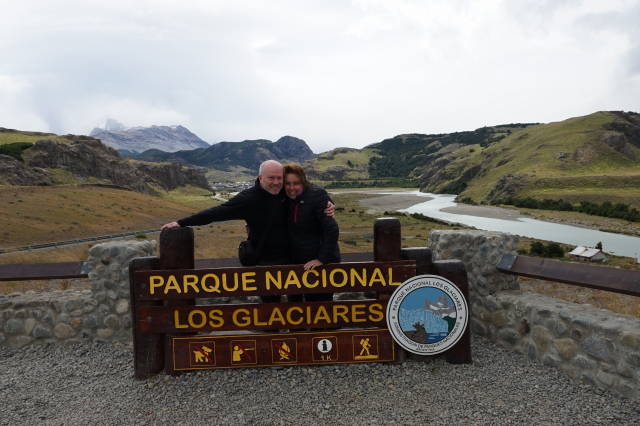
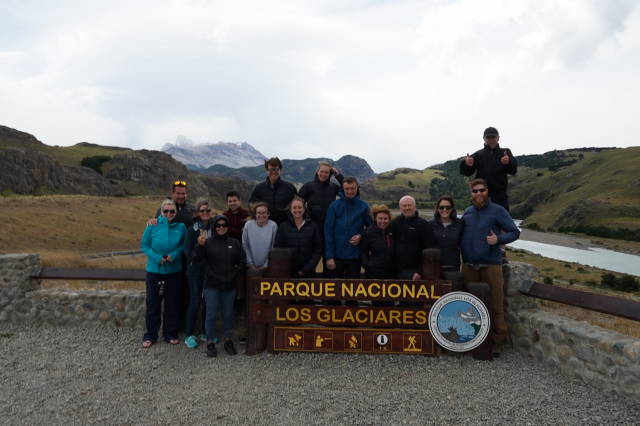
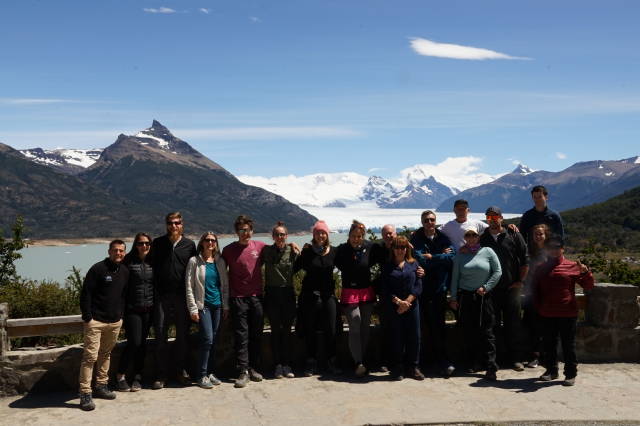
Our G Adventures group
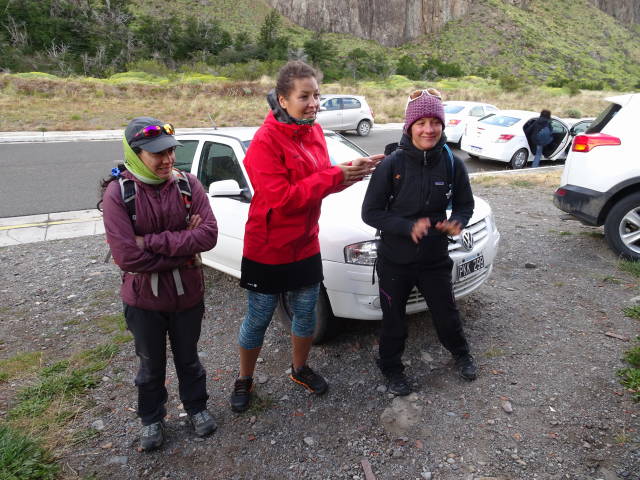
All female guide team
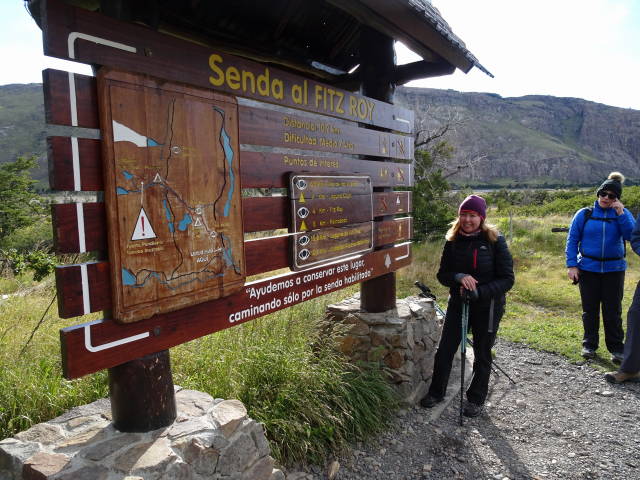
The start of the first trek
The first trek was 28km to the Fitzroy mountain. The indigeneous name is Chalten which means smoking mountain. That’s not because it’s a volcano but because of the clouds that hang around the summit and look like smoke.
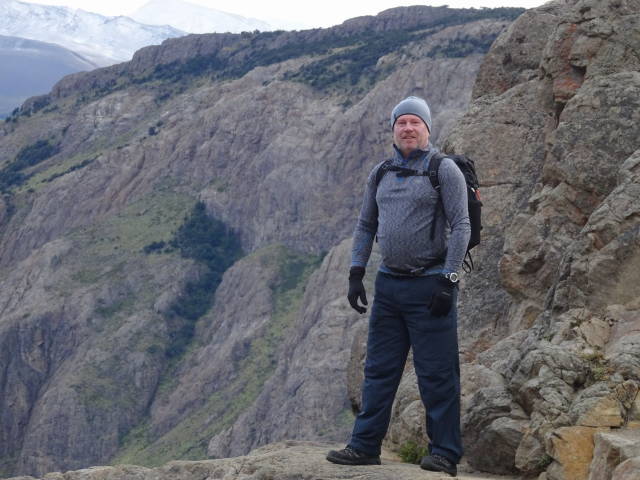
Rocky Ronnie
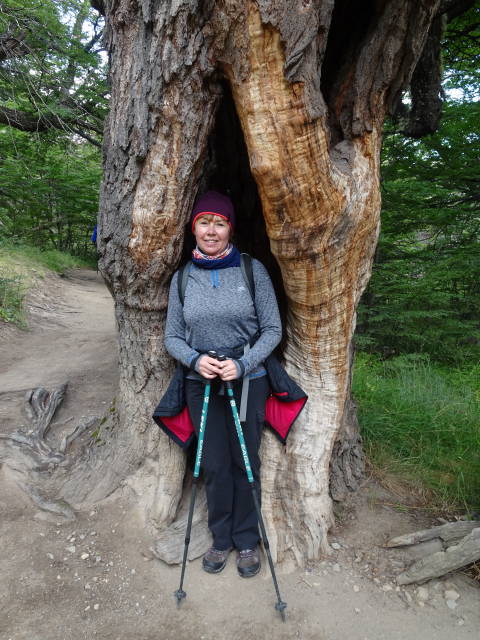
A pixie in the woods
Some forest fires caused by careless hikers have been devastating. This part of the world doesn’t get lightning, so there are no natural fires for the nature to get used to.
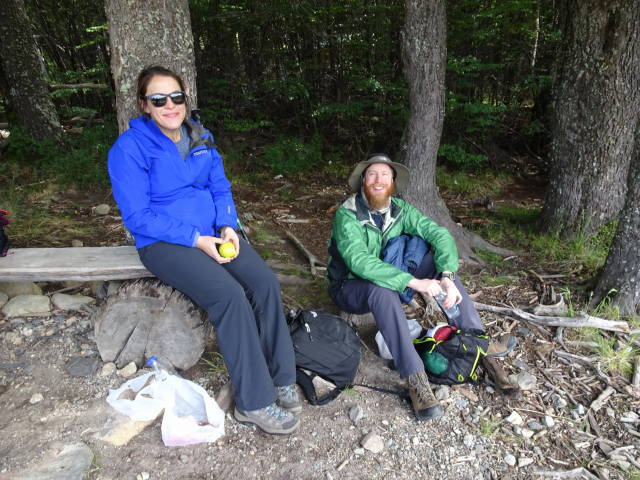
The Americans from our group
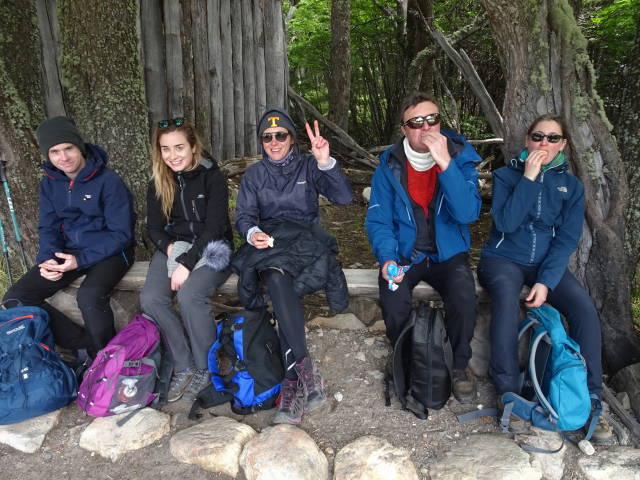
Irish and Germans with an Aussie in the middle
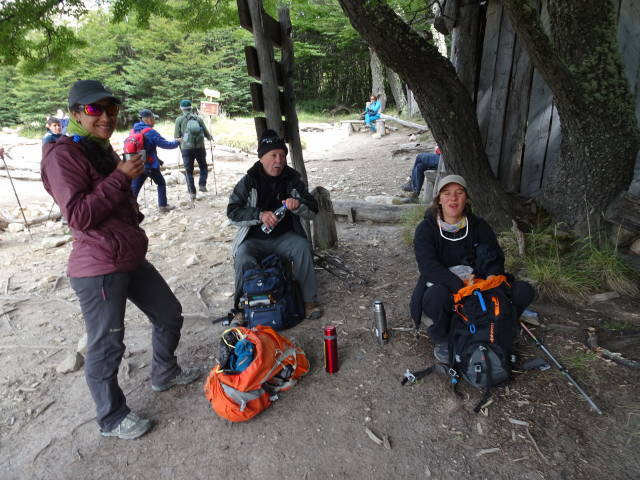
Our local guide with Terry the Canadian
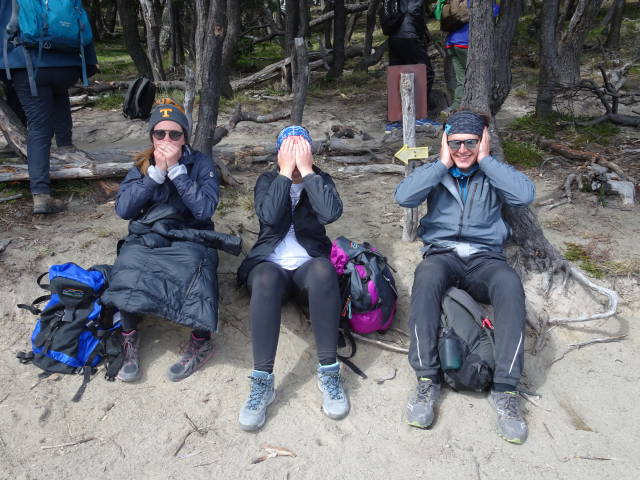
Speak no evil, see no evil, hear no evil – The 3 wise (?) Aussie monkeys
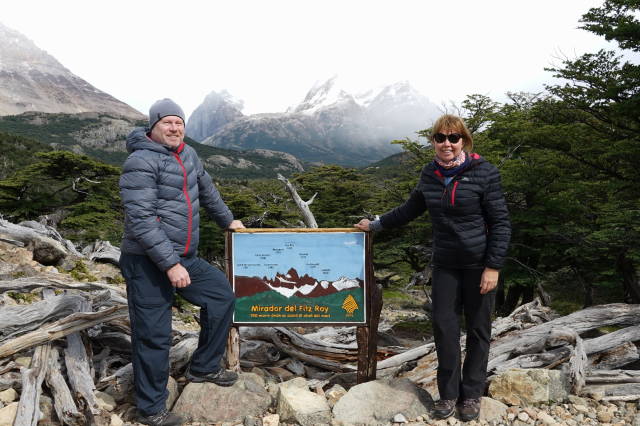
The first viewpoint
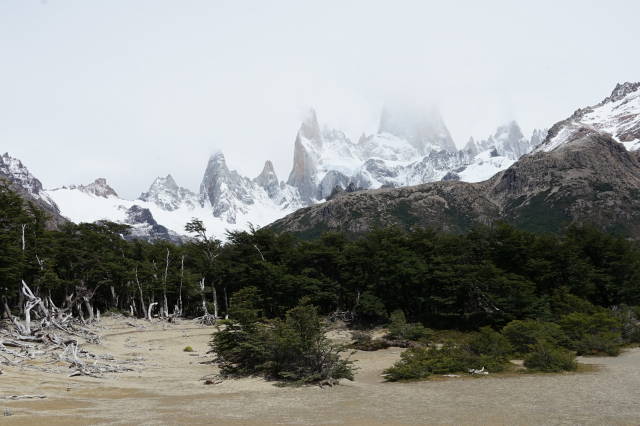
“Beach” and mountains
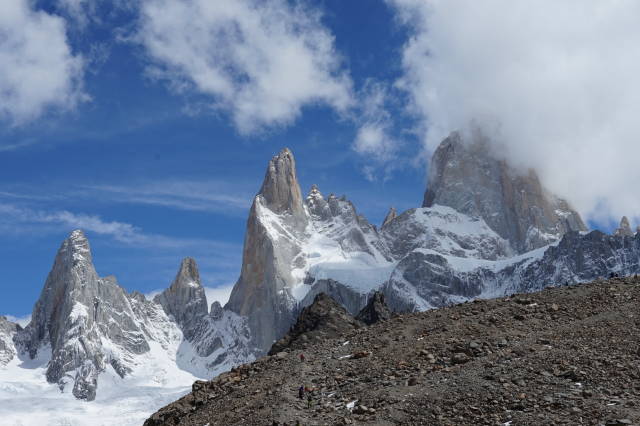
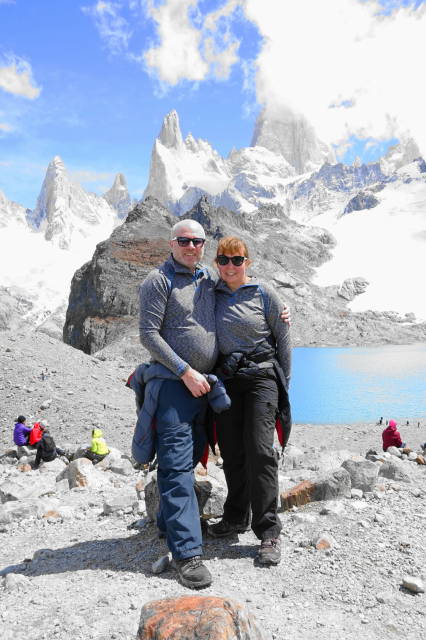
El Chalten (Mount Fitzroy) with Laguna de Los Tres
On the second day we did a shorter hike (13 km) to a waterfall.
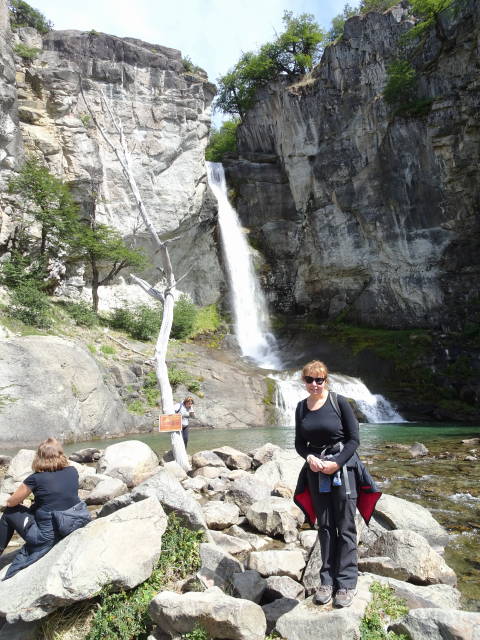
Waterfall hike
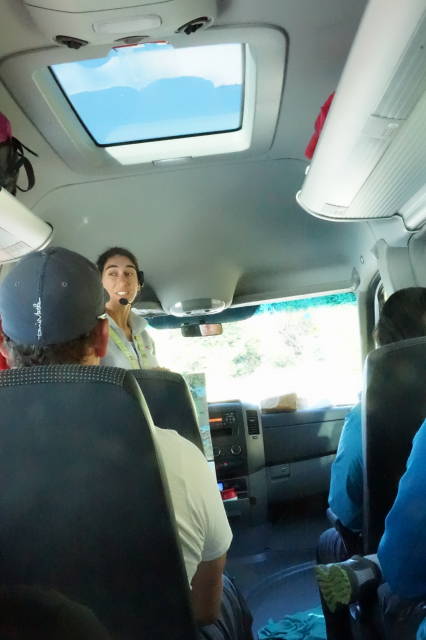
Ceci our brilliant local guide for the Glaciers National Park
We took a trip to the Perito Moreno glacier. This is one of the few advancing glaciers in the world. The scientists can’t explain why when the others are shrinking due to global warming.
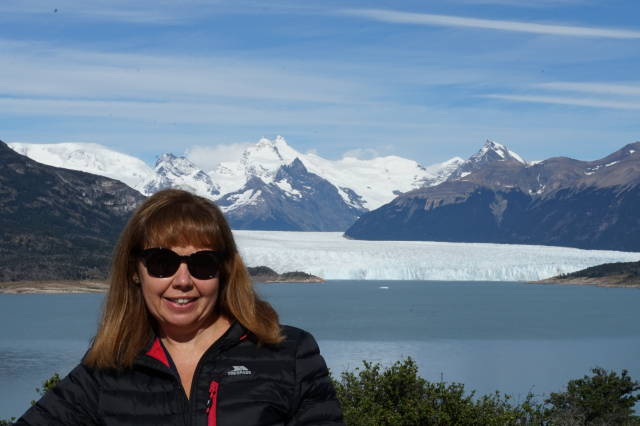
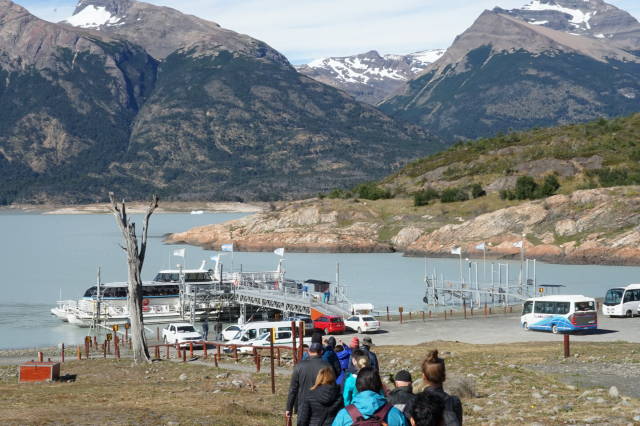
Boat trip to the glacier
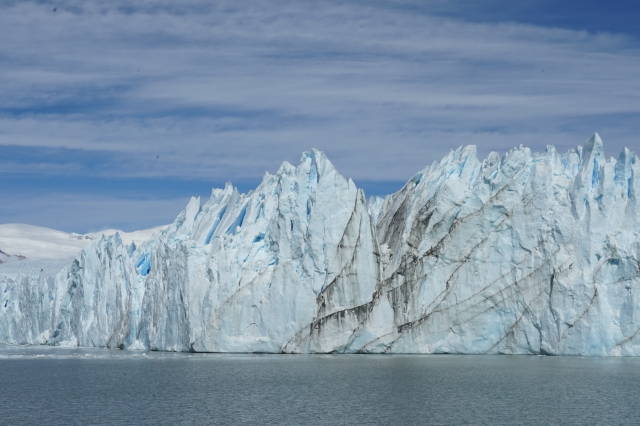
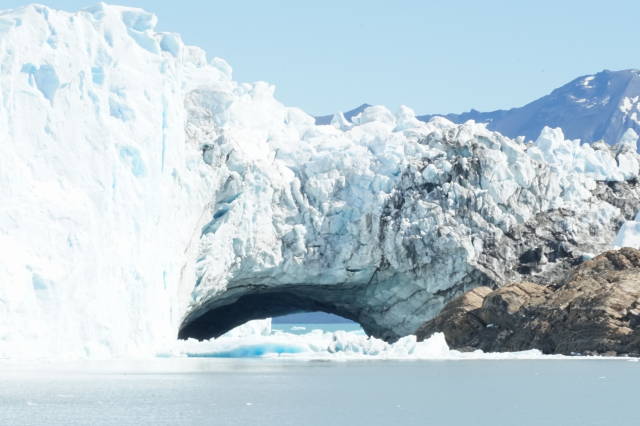
The arch which blocks the flow and then collapses
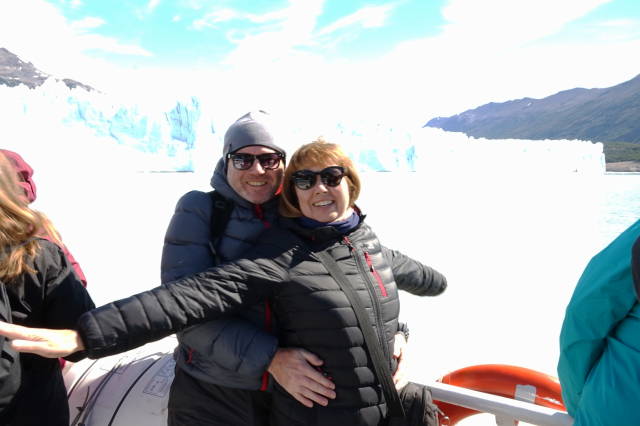
We also viewed the glacier from the North side via 3km of walkway.
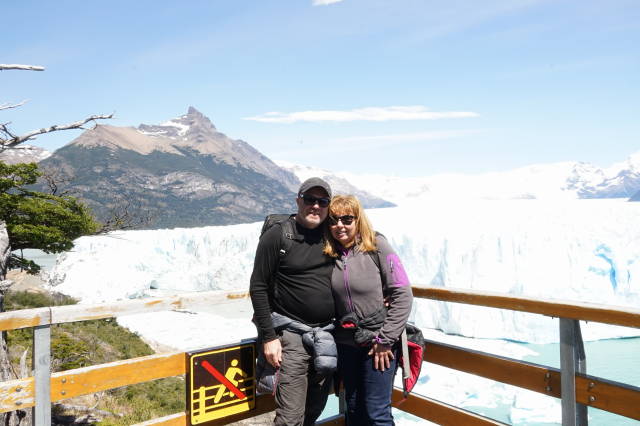
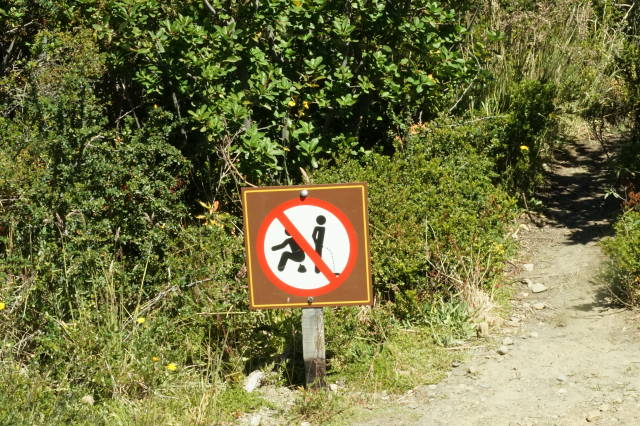
It’s not a toilet
We spent a night in Puerto Natales before starting the trekking. Nearby, an extinct “Milodon” was discovered in a cave in a well-preserved state. This creature wasn’t as scary as it looks. It was related to the sloth and was vegetarian.
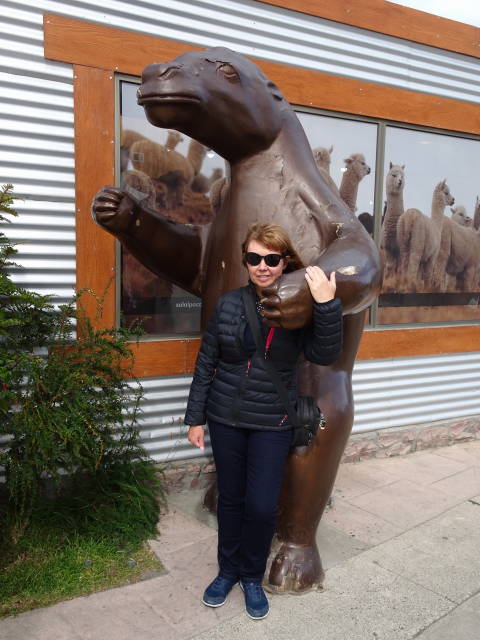
Michelle and Milodon
Then we headed to Torres del Paine National Park for 3 days for the main treks. We did the 3 sections of the “W” trek, named after the shape from the valleys you hike in.
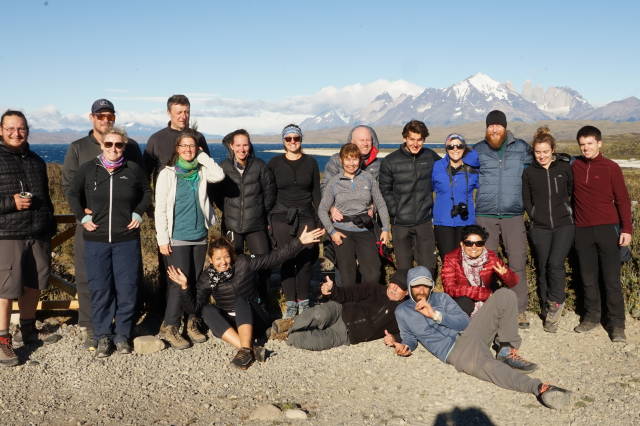
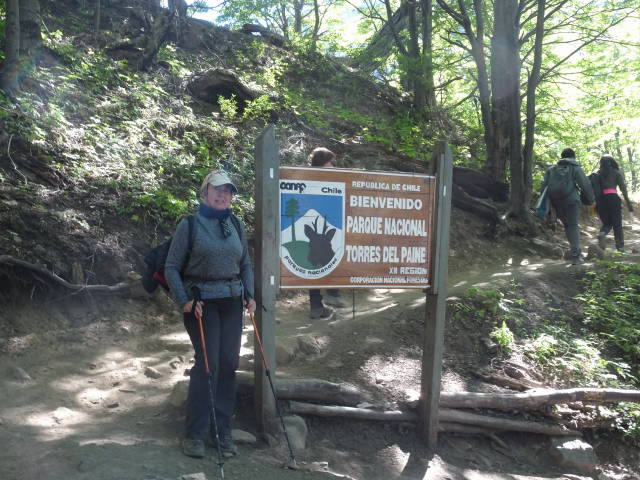
Entering the National Park
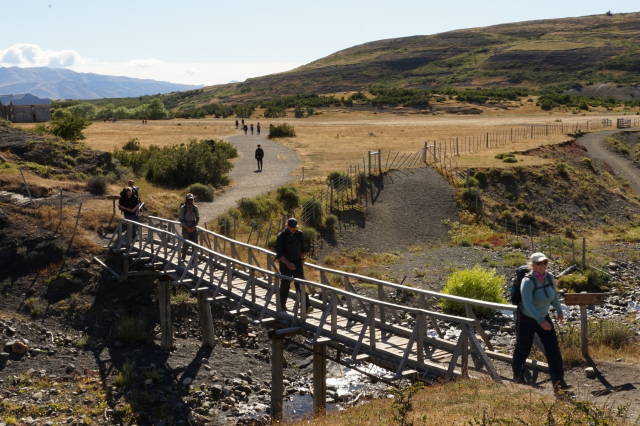
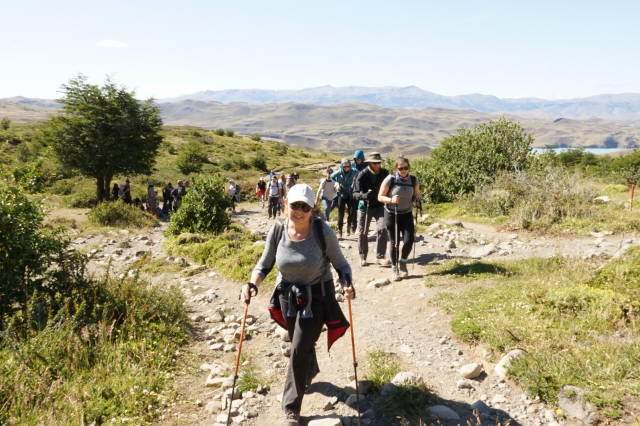
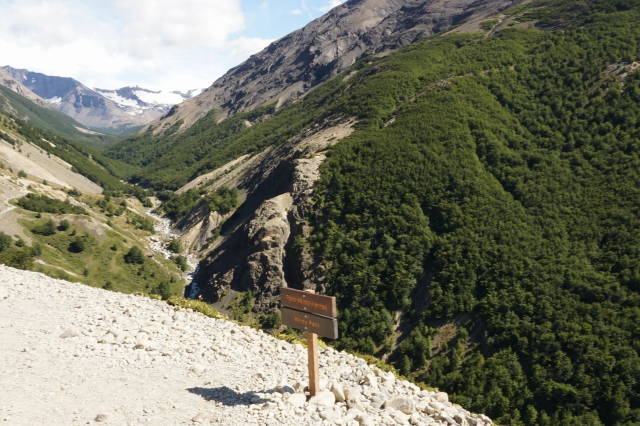
“Windy pass” – How did it get its name?
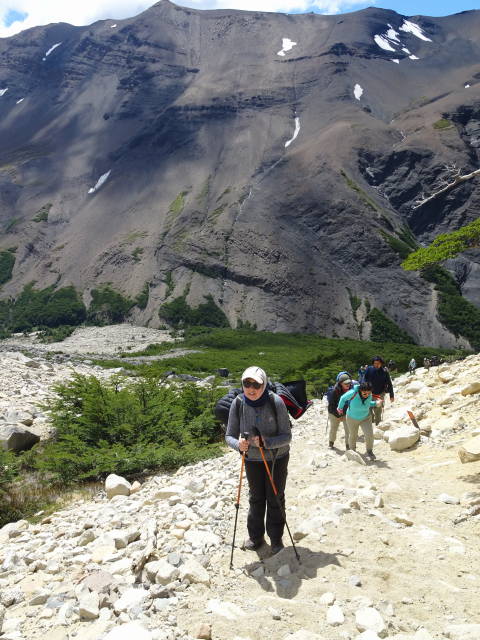
Tough uphill
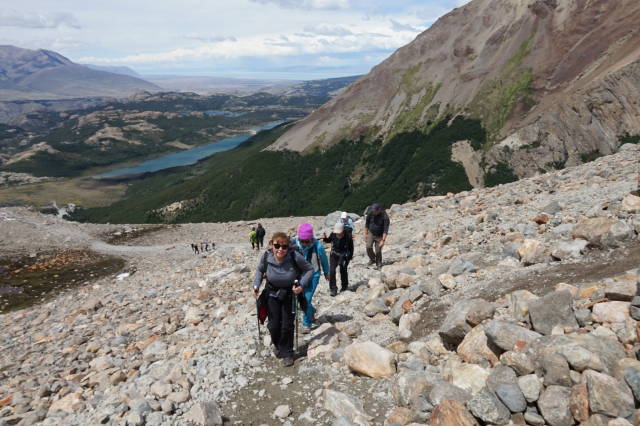
Still going up
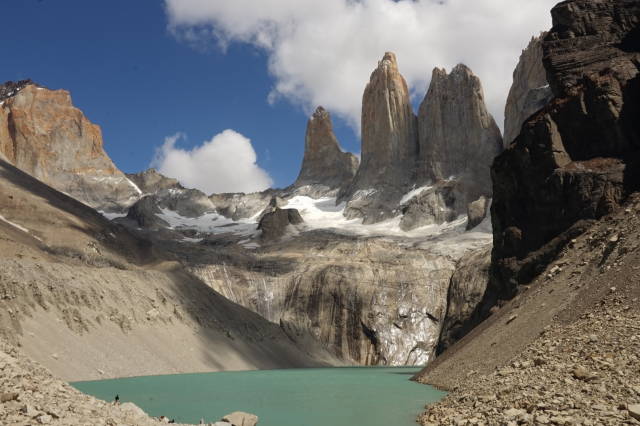
The towers (Torres) with the lagoon below
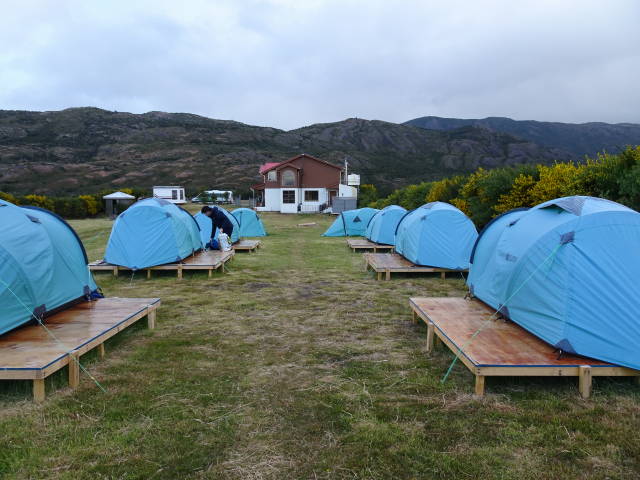
The first campsite
We took a catamaran boat across the lake to the next section of the “W”.
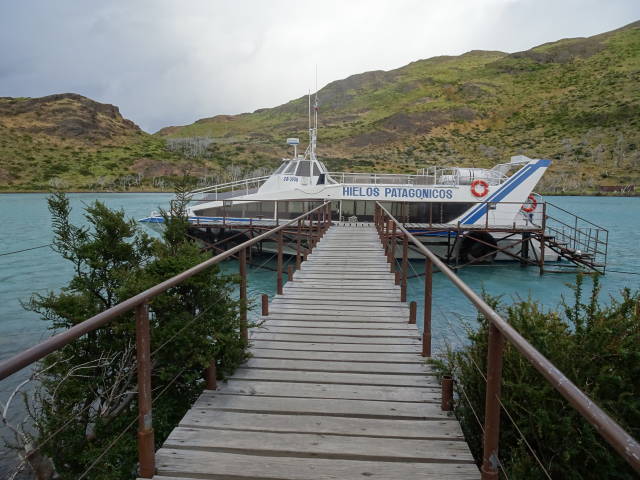 Catamaran across the lake
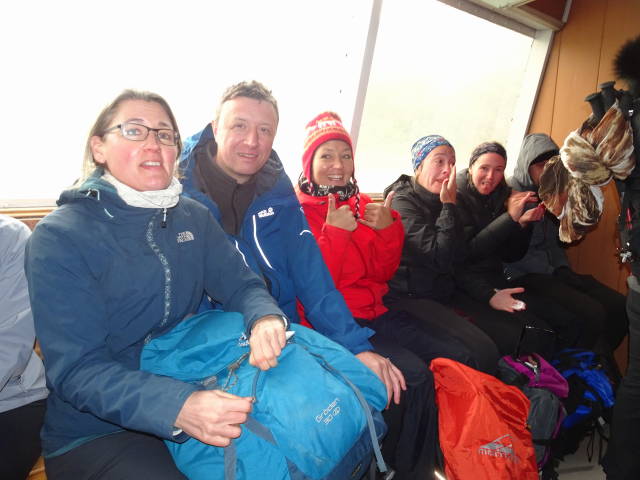
Sailors
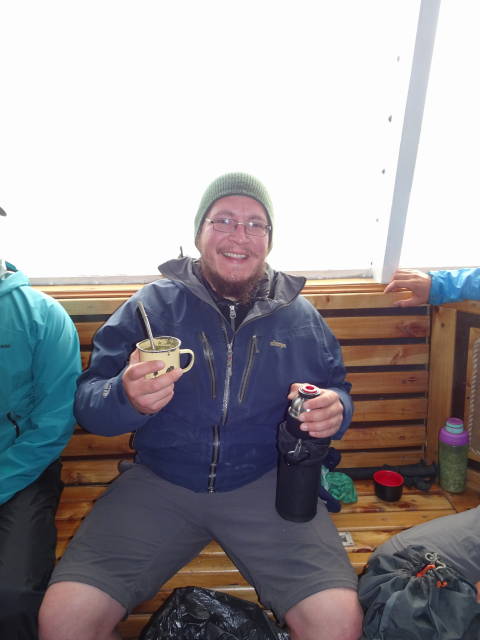
Our guide Nico with his Mate tea
Mate is made from a mix of various herbs. There’s a whole ceremony around it where the mug is passed around the group. It’s drunk through a metal straw with a strainer built in to the bottom to hold back the leaves.
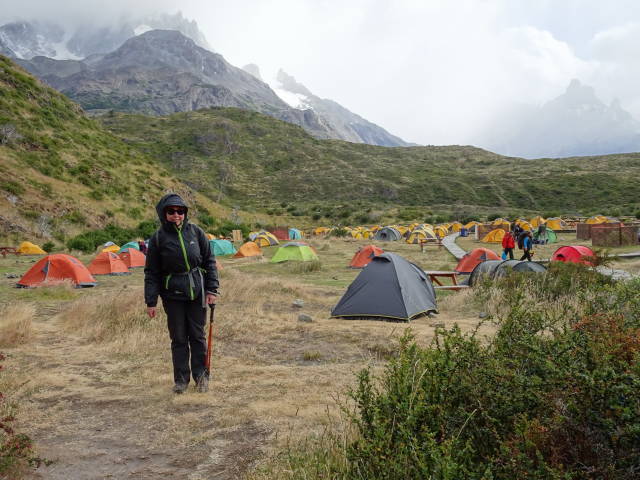
Happy camper – The second campsite
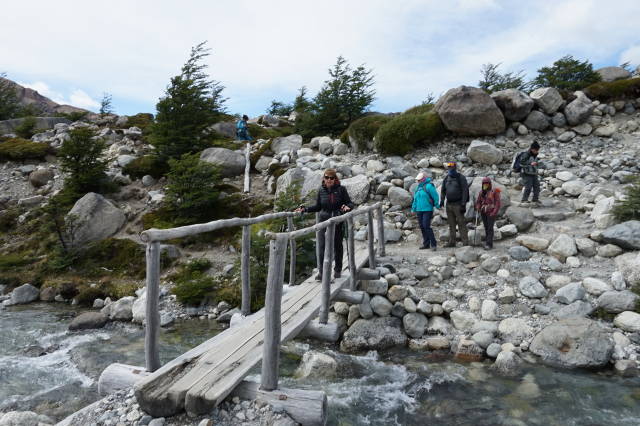
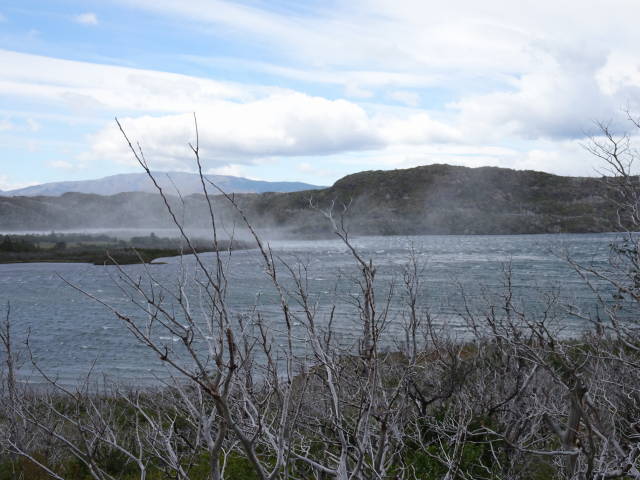
Water whipped by the wind
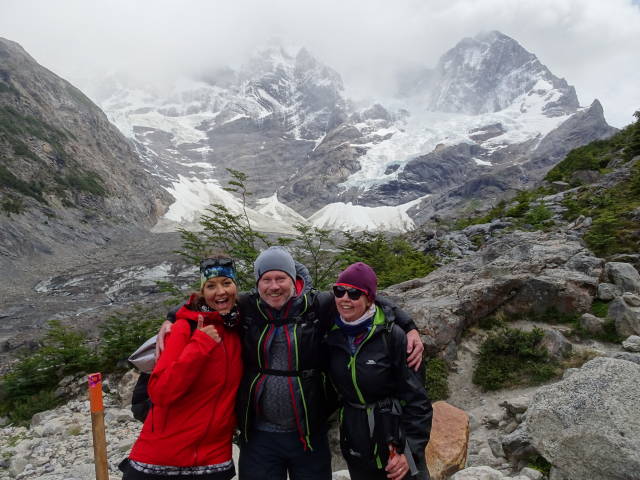
with Steffi our G Adventures guide
Another day, another trek to “French Valley”. The mountains are a combination of the sedimentary rock which was pushed upwards to form the Andes, and granite which formed from the mantle.
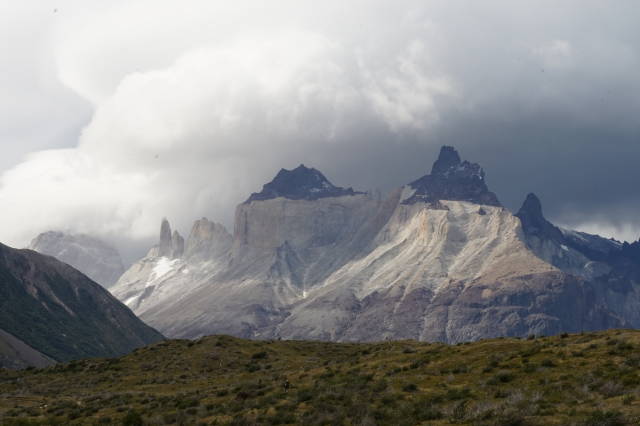
The Horns
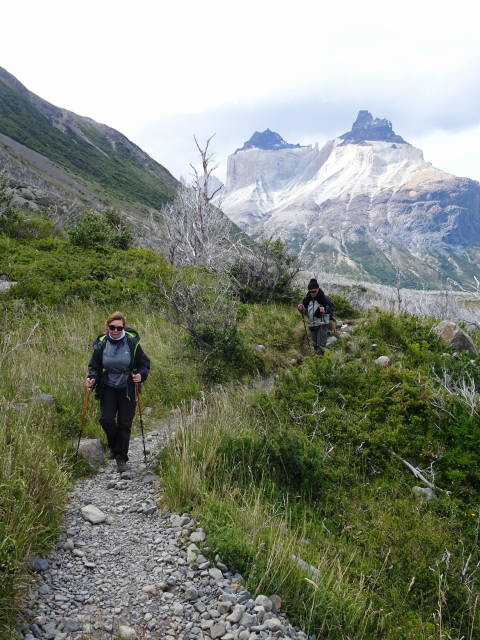
The third day was a shorter hike to the Grey Glacier before catching the catamaran back across the lake.
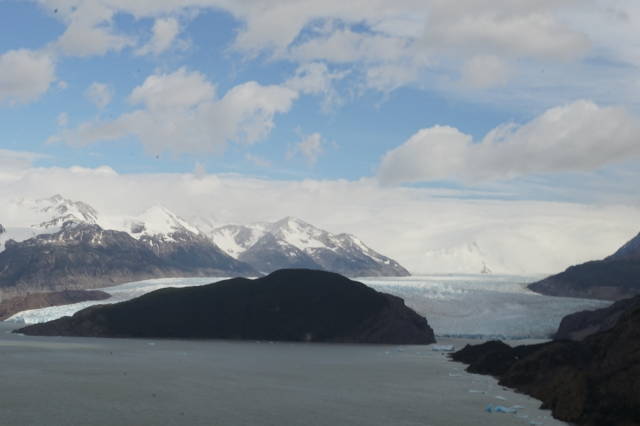
Grey glacier
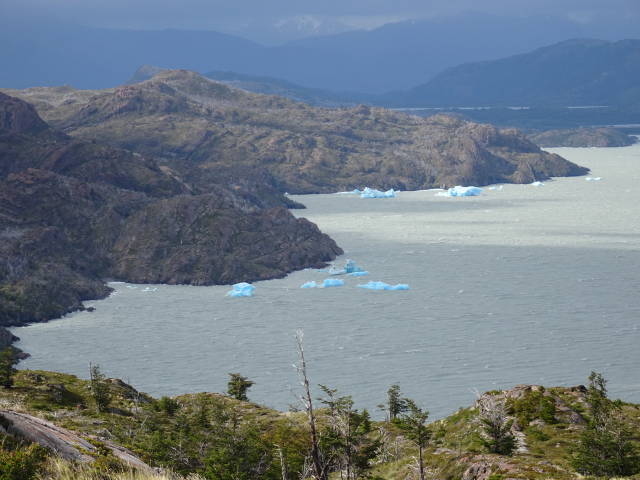
Icebergs from the glacier
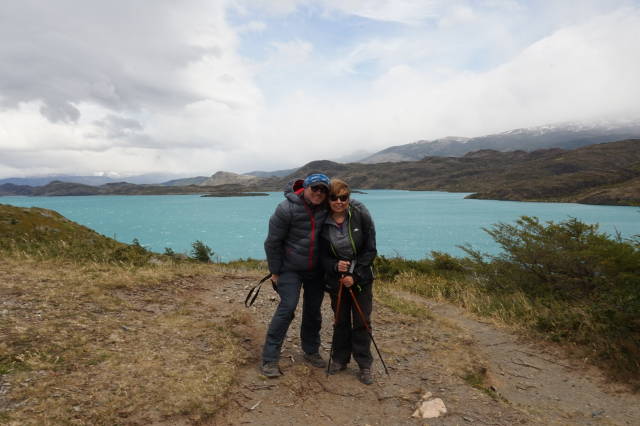
We returned back to Puerto Natales for one night to re-fuel and let the legs recover. We did a total of around 110km of hiking in pretty challenging terrain. Tiring but very fulfilling!
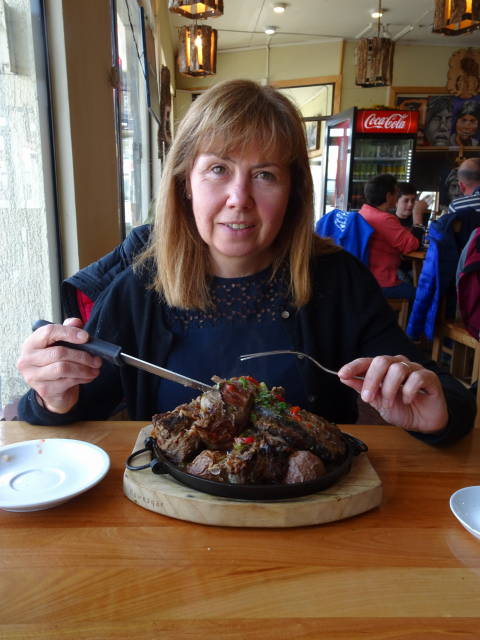
Lots of Patagonian lamb protein for muscle repair