We took a tour to the outstanding Tatev monastery and the mysterious Karahunj standing stones . We really didn’t expect the earth-shattering discoveries to come…
For a little background, that will be important later, Armenian people believe themselves to be decended from “Hayk”. They call themselves “Hay”, and are a little confused when foreigners call them Armenians.
We were supposed to take a cable car to the monastery, but unfortunately it was cloudy and the cable car was closed so we drove up instead.
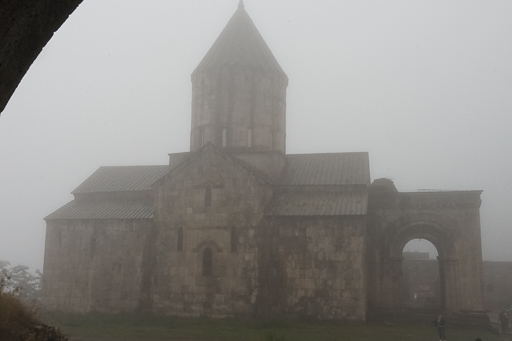
Tatev is very impressive and as much a castle as a monastery. At one time it hosted over 1,000 monks. It has various defences to protect it from the many attacks over its history. They were self-sufficient, with their own mill, and even had an oil press so they could make burning oil to pour on invaders. There are many secret escape passages. During one attack by the Turks however, over 10,000 parchments were destroyed.
In the 14th and 15th centuries, the monastery hosted one of the most important Armenian medieval universities, the University of Tatev, which contributed to the advancement of science, religion and philosophy.
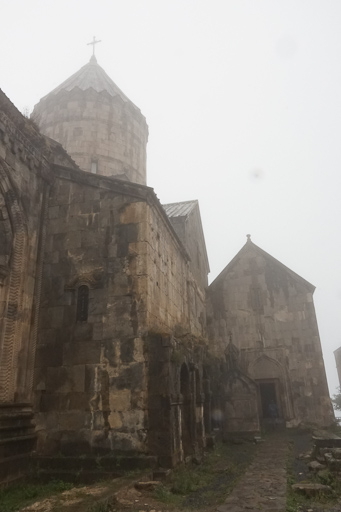
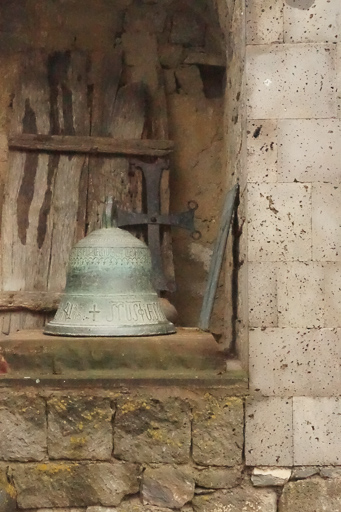
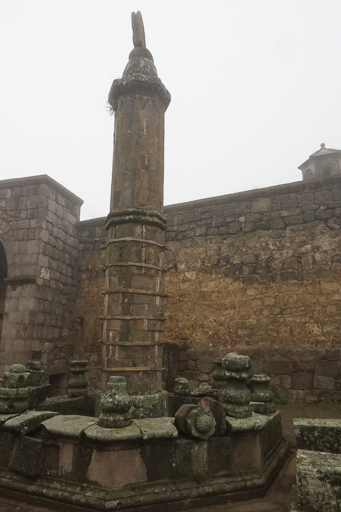
But undoubtedly the most amazing feature at Tatev is the Gavazan (Syun) column. It is 8 metres tall and has 8 sides and was built in 905-905AD. It is an earthquake detector!!! It tilts when tremors are detected, and straightens automatically afterwards. I didn’t try this, but apparently you can make it lean simply by pushing it with your hand. It can now lean 5cm, but originally tilted 30cm. It could also apparently detect the pounding of horses hooves by invading armies.
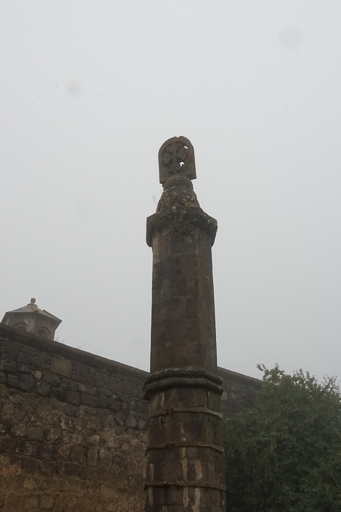
How it operates is not understood, and rightly they don’t want to excavate it to find out.
Another little known feature of the Gavazan column is that it is a calendar.
For another little bit of background, Hayk (the Armenian peoples’ “Adam”), is associated with the red Alpha-Orion star “Betelguese” in the Orion constellation.
The ancient Armenian New Year “Navasard” is on 11 August. On that date, the Gavazan column points upwards to the three stars of Orion’s belt which reach the celestial equator on that day. Clever? Also interestingly, Orion is named “balance axis” in Armenian. Spooky?
Astronomical calendars were very important to ancient civilizations, not only for religious ceremonial reasons, but so that they could know when to plant and harvest crops.
We stopped at the Karahunj (Zorats Karer) standing stones. This is nicknamed the Armenian Stonehenge.
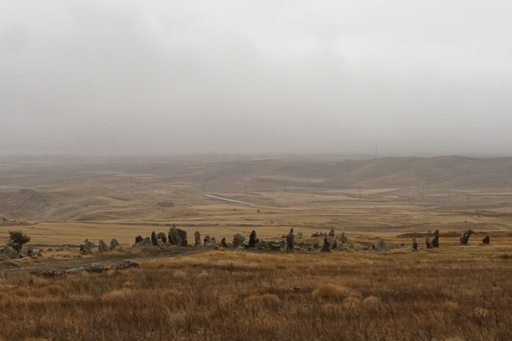
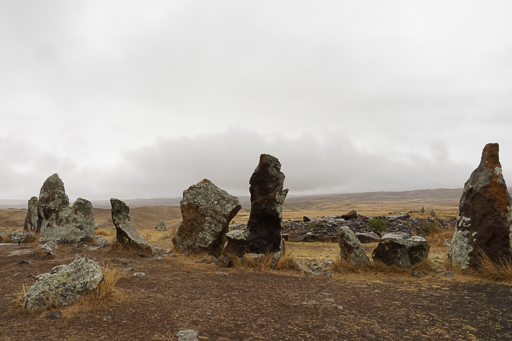
Karahunj translates as “speaking stones”, although the real meaning of that is not understood. There are 222 stones and 84 have holes bored through them. The stones weigh 50 tonnes and were moved hundreds of kilometres from the Dar river canyon.
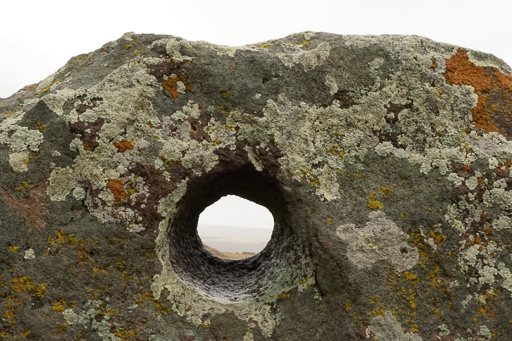
The tour guide gave three possible explanations of the purpose of the stones, but investigations have shown that they are clearly an observatory, and are aligned to the Orion constellation. The holes can be used as a telescope for checking the star alignments. Clearly the connection with Orion is for the same reasons as the Gavazan column at Tatev.
At 7,500 years old, it is believed to be the world’s oldest observatory, pre-dating Stonehenge and Orkney.
How Karahunj is not internationally famous is hard to understand. It is at least as significant as Stonehenge or the pyramids in Giza, and perhaps pre-dates the pyramids.
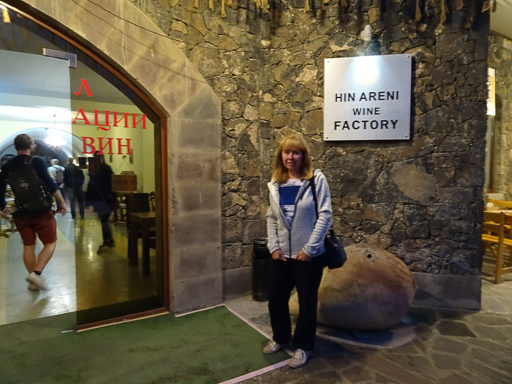
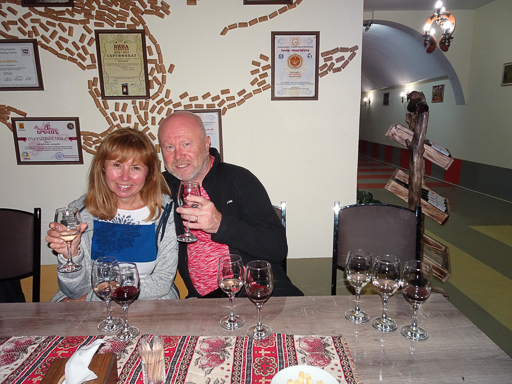
On the way back we stopped at the Areni wine factory. They have been making wine here for over 6,100 years. They use only two types of grape, one of which is the ancient Areni variety. We had a tasting of course!