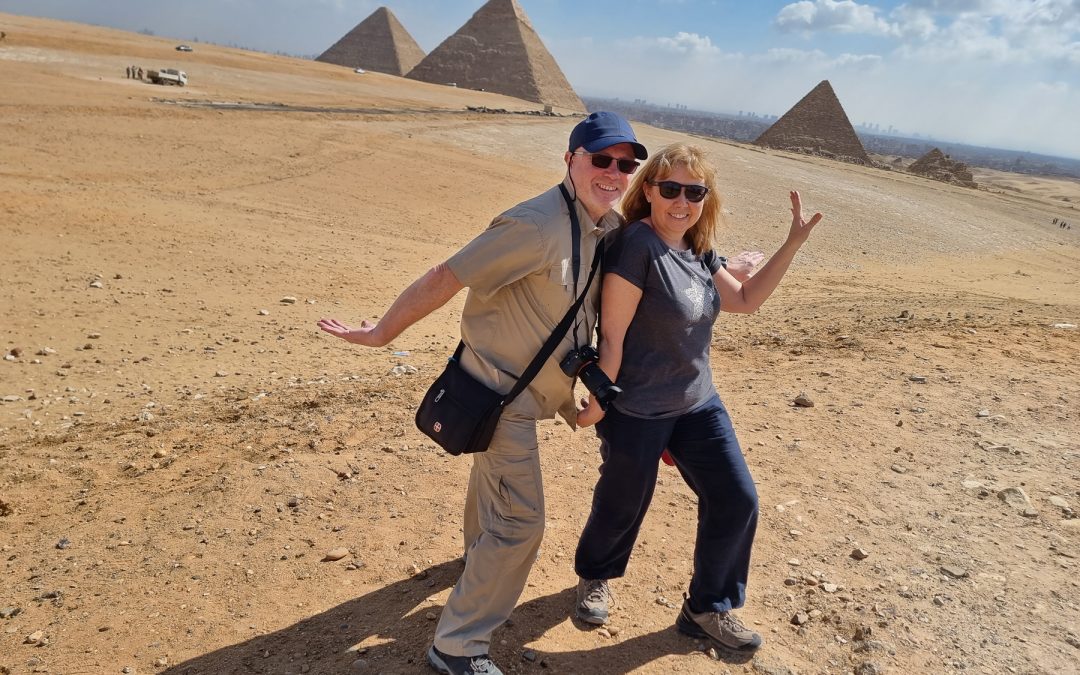
We left early to get to the Giza pyramids before most of the crowds. We were excited with the anticipation of achieving a lifelong dream, and seeing the last remaining of the ancient seven wonders of the world.
The city of Cairo encroaches onto the pyramid site.
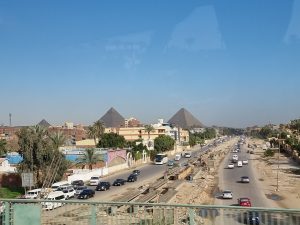
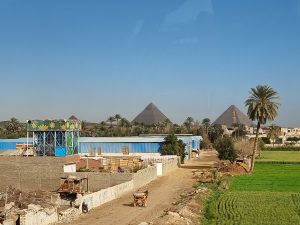
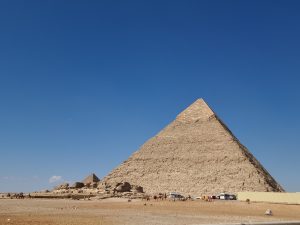
Teasing us from a distance
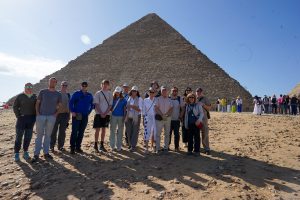
Our group arrives at the Great pyramid of Khufu
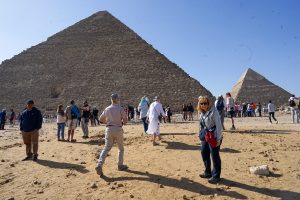
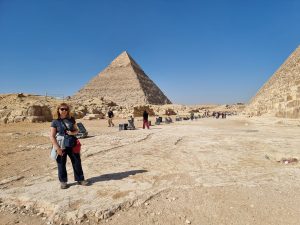
Michelle was there
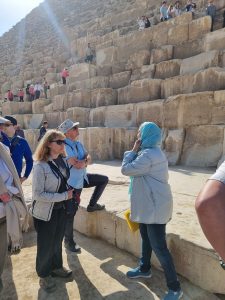
Our guide Manar informing us
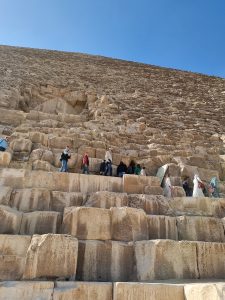
The large stone blocks
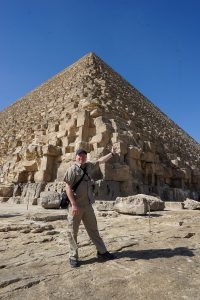
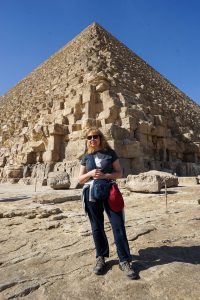
The Great pyramid is constructed of over 2.3 million blocks weighing an average of 2.5 tons. The blocks were originally covered with smooth casing stones.
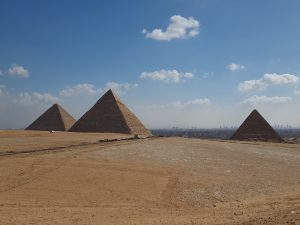
The pyramid of Khafre still has some of the smooth casing blocks on top. The smaller pyramid is the pyramid of Menkaure.
The Sphinx in situ with the 3 pyramids
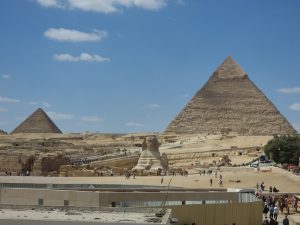
And closer
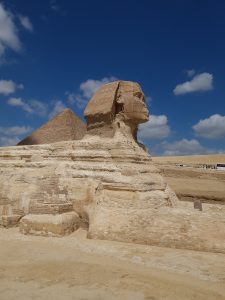
Closer still
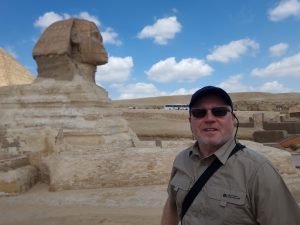
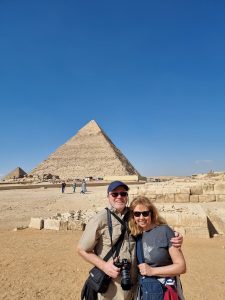
I was there
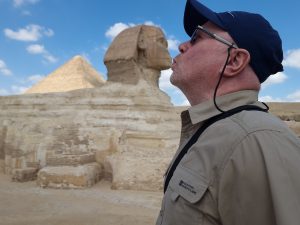
Sphinx smooch
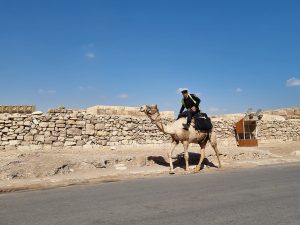
Police vehicle
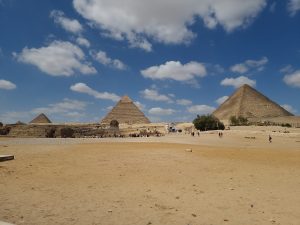
Then we moved to a viewpoint to get a clearer view of the pyramids together.
The sides of the pyramids are orientated North-South and East-West. It’s also not an accident that the pyramids are not in a straight line. The ancient Egyptians were smart enough to do that if they wanted. The pyramids are aligned to the three stars in the “belt” of the Orion constellation.
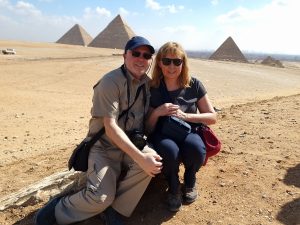
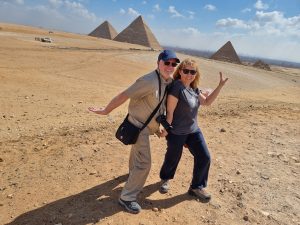
Walking like Egyptians
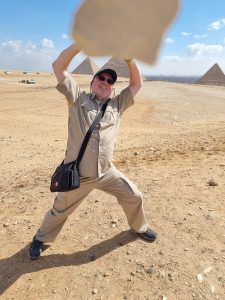
Helping to lift a few blocks
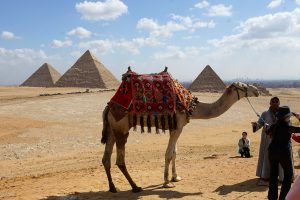
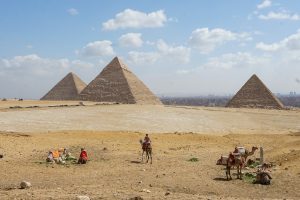
More authentic with camels
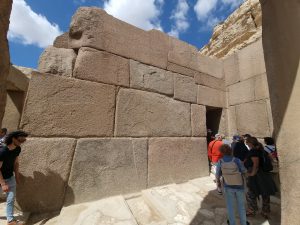
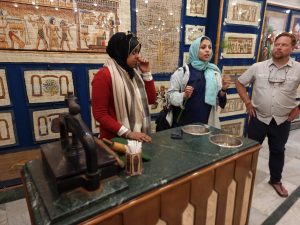
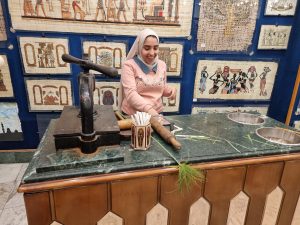
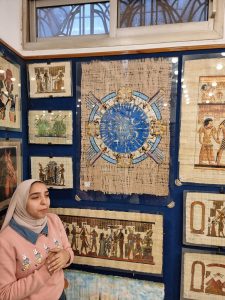
Megalithic block constructionAfter the pyramids, we stopped at a Papyrus factory/shop to see the process of how it is made.
Papyrus grows in the Nile delta, and is a symbol of lower Egypt. It’s also where we get the English word “paper” from. The Lotus flower symbolises creation and rebirth as at nightfall it closes and goes beneath the water, and at dawn it climbs above the water and reopens. It was the symbol of Upper Egypt.
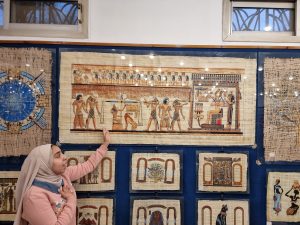
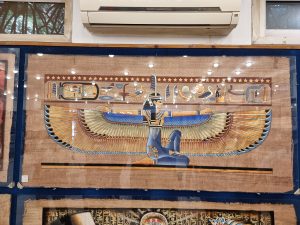
Then of course you could buy Papyrus souvenirs from the shop.
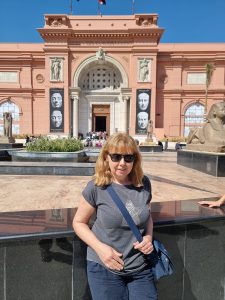
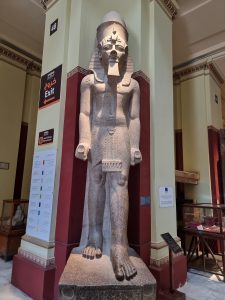
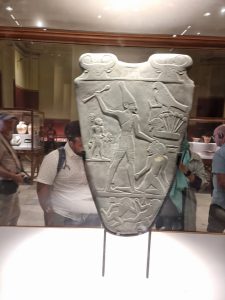
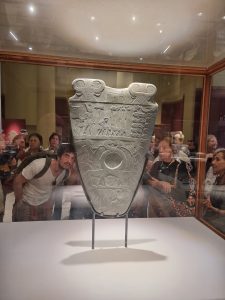
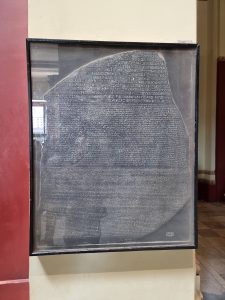
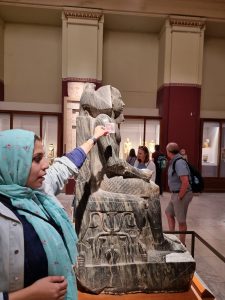
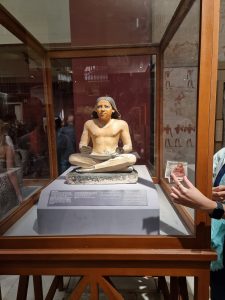
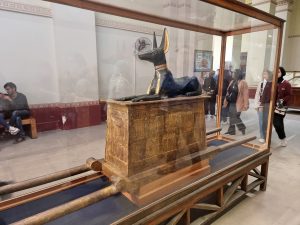
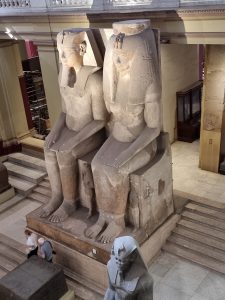
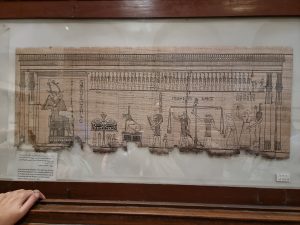
Next we visited the Egyptian Museum in Cairo.
Then it was time to get the overnight sleeper train to Aswan. Each carriage had two bunk beds.
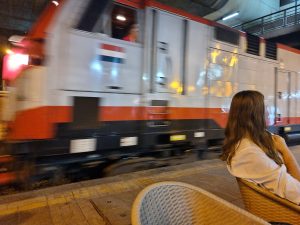
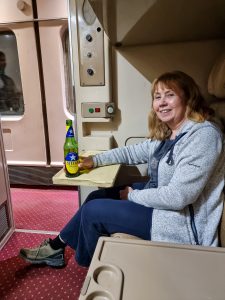
Unwinding before bed with a bottle of the local Stella beer.