Continuing the staycation theme, we took the caravan to Melrose in the Scottish Borders. Fortunately the caravan boiler was fixed so we had heating and hot water – quite necessary in late November.
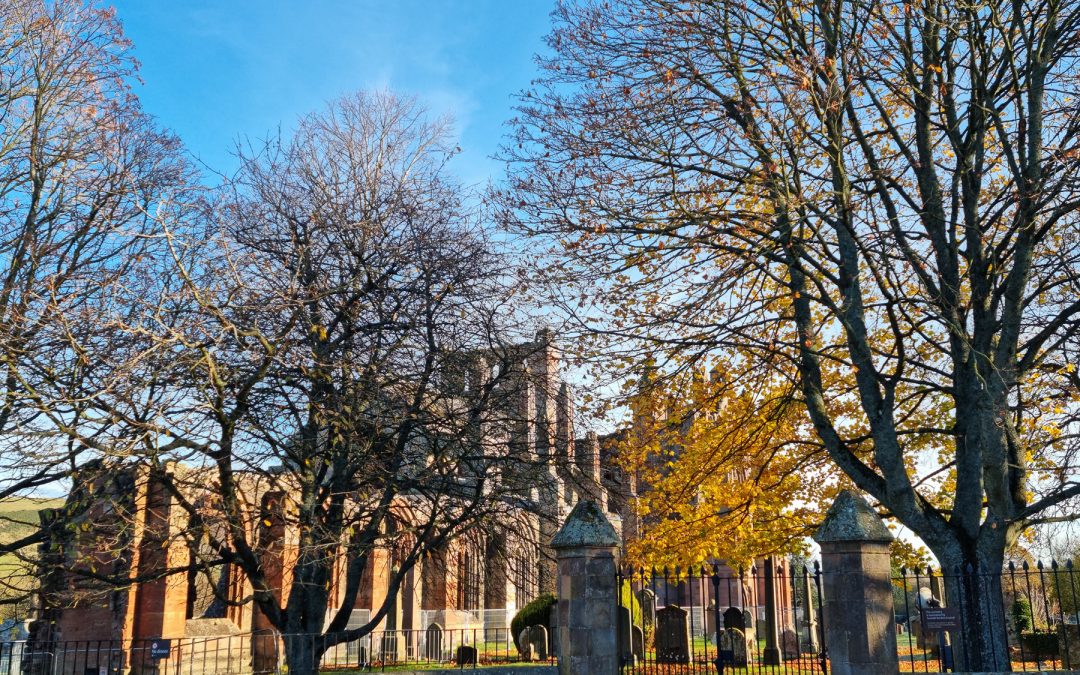
Melrose is famous for its Abbey, and its claim to fame as the home of Sevens rugby, where it was first played. King Arthur is reputedly buried in the Eildon hills which surround the town.
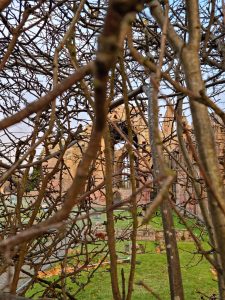
Abbey and thorny tree
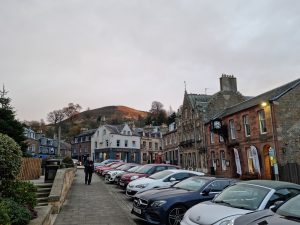
Town centre

Frosty morning
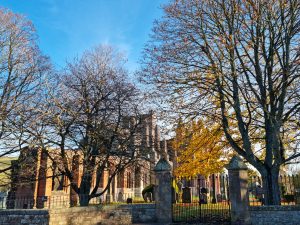
The Abbey
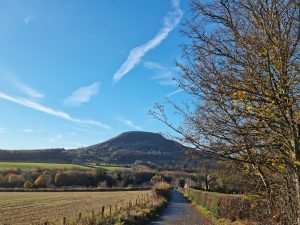
One of the Eildon hills
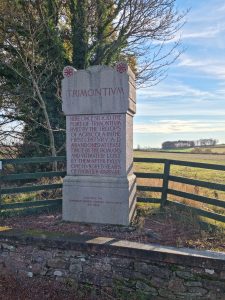
We took a decent walk to the Roman site of Trimontium via the village of Newstead. Newstead is supposedly the oldest continually-inhabited settlement in Scotland. So it should really be called “Oldstead” then?
Trimontium was a very significant Roman site, although there’s not much left to see now. It was named after the surrounding, prominent Eildon hills – Trimontium is “three mountains” in latin.
Trimontium was a very significant fort and supply site for the Romans’ foray further north in Scotland. Despite conquering most of Europe, the Romans didn’t manage to spend too long in Scotland. They were eventually driven back by the ferocious Scottish tribes of the time, to hide behind Hadrian’s wall on the English border.
We walked on to the Leaderfoot viaduct.
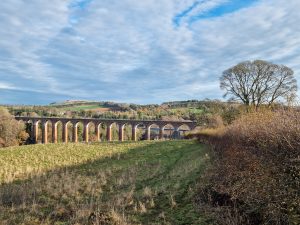
If you look closely, there are actually three bridges, the Leaderfoot railway viaduct, the old road bridge (which was originally the site of the Roman bridge), and the new A68 road bridge.
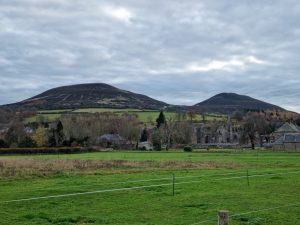
Two of the Eildon hills
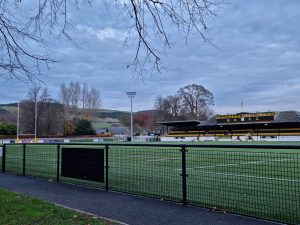
Melrose Rugby Football Club ground where the game of Rugby Sevens originated.
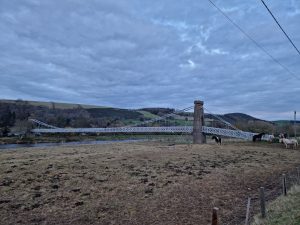
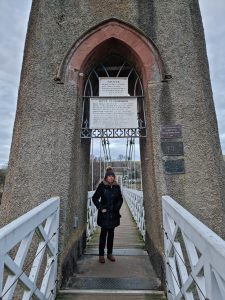
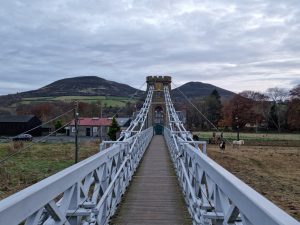
The next day we took a shorter walk including the Chain bridge.
We took a day trip to the nearby Borders town of Kelso. It also has an Abbey – they clearly used to be quite a religious bunch around there.
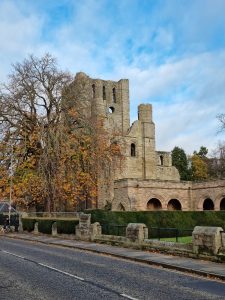
Kelso Abbey
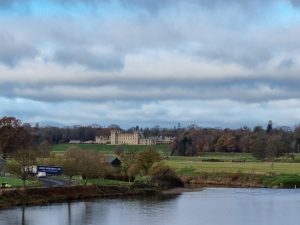
Floors castle
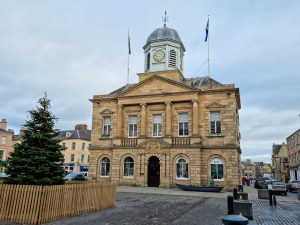
Kelso marketplace